Can Foreigners Buy in Trinidad and Tobago?
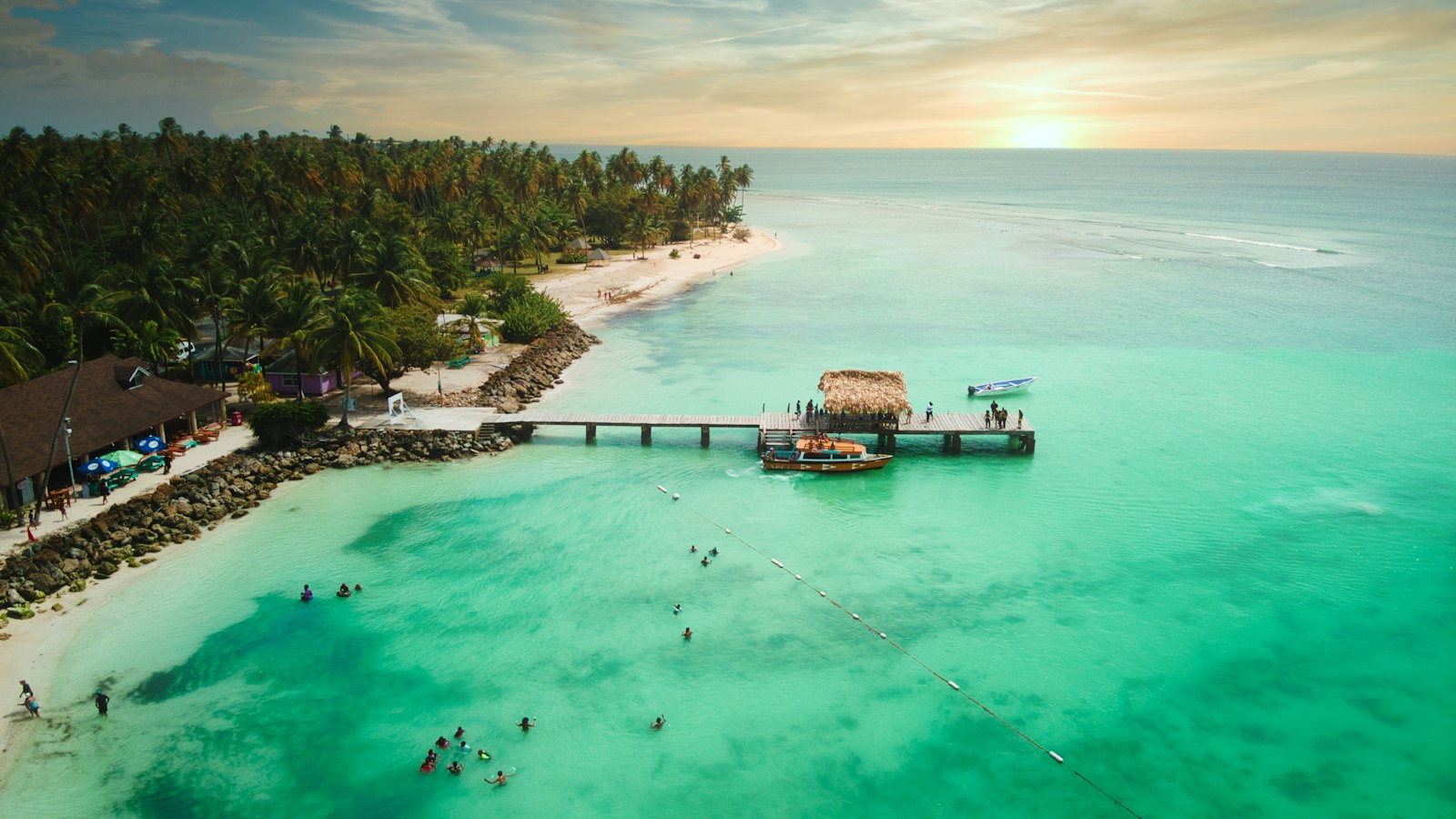
Can Foreigners Buy in Trinidad and Tobago?
Yes, foreigners can buy property in Trinidad and Tobago, and a home on up to one acre in Trinidad needs no licence, as at November 2026. Tobago needs a licence for any land, and the independent republic's Foreign Investment Act requires one for larger holdings. The buyer's attorney must also notify the Ministry of Finance after the purchase.
Key takeaways
Trinidad: a foreign buyer can take up to one acre for a home, or five acres for business, with no licence.
Tobago: any land purchase by a foreign buyer needs a licence under a 2007 order, whatever the size.
Paperwork: after a purchase without a licence, the buyer and attorney file a notice with the Minister of Finance.
Stamp duty: a house is free of duty up to TT$850,000, then charged at 3%, 5% and 7.5% in bands.
Annual tax: the Property Tax Act was repealed by the Finance Act 2025, but landlords now pay a 2.5% or 3.5% surcharge on rent.
Legal framework
Trinidad and Tobago is an independent republic with its own land, tax and immigration law. For a foreign buyer the law that matters is the Foreign Investment Act 1990, Chapter 70:07, which says how much land a foreigner may hold without a licence and how the price must be paid.
Key facts
Legal framework: an independent republic; foreign land ownership is governed by the Foreign Investment Act 1990, Chapter 70:07 (Verified)
Home without a licence: up to one acre for residential purposes (Verified)
Business land without a licence: up to five acres for trade or business (Verified)
Larger holdings: a licence, applied for through the Ministry of Finance and registered with the Registrar General (Verified)
Tobago: a licence for any land, whatever the size (Corroborated)
Notice after buying: the buyer and attorney notify the Minister in duplicate, on the form in the Act (Verified)
Payment: in an internationally traded currency through an authorised foreign-exchange dealer (Verified)
Stamp duty on a house: nil to TT$850,000; 3% on the next TT$400,000; 5% on the next TT$500,000; 7.5% above (Verified)
Stamp duty on land only: nil to TT$450,000; 2% on the next TT$200,000; 5% on the next TT$200,000; 7% above (Verified)
First-time homeowner exemption: up to TT$1,500,000 on a house, for deeds from 1 January 2019 (Verified (see note)). Note: the Inland Revenue Division does not say whether a non-resident foreigner can claim it.
Annual property tax: the Property Tax Act was repealed by the Finance Act 2025 (Corroborated)
Landlord surcharge: 2.5% of gross quarterly rent up to TT$20,000, 3.5% above, since 1 January 2026 (Corroborated)
How much land can a foreigner buy without a licence?
In Trinidad in 2026, a foreign investor may buy up to one acre for residential use, or up to five acres for trade or business, without a licence, under sections 6 and 7 of the Foreign Investment Act. A foreign investor is an individual who is not a national of Trinidad and Tobago or another Member State under the Act, or a company incorporated abroad or controlled by such people, for example through half the votes or voting shares. Anything larger needs a licence. The Act says licences are granted by the President or a person the President delegates, and the Ministry of Finance publishes the application form. A licence has no effect until it is registered with the Registrar General. Land held without a required licence can be forfeited, and anyone who knowingly causes land to pass to a foreign investor without one faces a fine of TT$100,000. The US State Department's 2025 investment report mentions only the five-acre figure, but the Act sets the lower one-acre limit for homes.
Why Tobago is different
Tobago is stricter than Trinidad. Since a 2007 amendment, the Act lets the Minister name areas where a foreigner needs a licence for any land, and the Foreign Investment (Tobago Land Acquisition) Order 2007 applies that to Tobago. So even a small house plot in Tobago needs a licence. The Trinidad Guardian reported in November 2025 that the Tobago Hotel and Tourism Association called for the order to be repealed or reformed, saying it holds back investment; no change had been found by November 2026. No official processing time is published. One 2026 adviser guide gives about 20 business days for simple applications and 4 to 6 months or more in Tobago outside designated development areas. A buyer should make the sale agreement conditional on the licence.
What happens after the purchase
Even without a licence, the paperwork does not end at completion. Under section 8 of the Act, the buyer and the attorney must send the Minister a notice in duplicate, on the form in the Act, with a copy of the deed, and the Minister returns one copy within seven days. The price must be paid in an internationally traded currency through an authorised foreign-exchange dealer. Moving money out again can be slow: the State Department reported in 2025 that businesses wait at least three months to convert local dollars into US dollars. The same report says about 80% of land still sits under the older common law title system, and that a squatter can claim private land after 16 years, so a careful title search matters. In the Budget of October 2026 the government proposed simplifying the Act from January 2027, including for deals up to US$100,000, but EY notes the legislation was still awaited.
What stamp duty and annual taxes cost
Stamp duty is the main purchase tax, and the Inland Revenue Division's rates do not differ for foreign buyers. On a house, or house and land, the first TT$850,000 is exempt; then 3% is due on the next TT$400,000, 5% on the next TT$500,000 and 7.5% on the rest. Residential land without a house is exempt up to TT$450,000, then charged at 2%, 5% and 7%. A first-time homeowner can claim an exemption of up to TT$1,500,000 on a house, but every joint buyer must qualify, and the official guidance is silent on non-resident foreigners. The attorney normally pays the duty and has the deed stamped, according to the Ministry of Finance. Each year, owners no longer face the residential property tax: PwC reports that the Finance Act 2025 repealed the Property Tax Act. Landlords instead register with the Board of Inland Revenue, pay TT$2,500 once, and pay a surcharge of 2.5% or 3.5% of gross quarterly rent.
Worked example: stamp duty in Trinidad and Tobago
These assume a buyer who is not claiming the first-time homeowner exemption.
House at TT$2,000,000: nil on the first TT$850,000; 3% of TT$400,000 = TT$12,000; 5% of TT$500,000 = TT$25,000; 7.5% of TT$250,000 = TT$18,750. Total TT$55,750, or about 2.8% of the price.
Land only at TT$1,000,000: nil on the first TT$450,000; 2% of TT$200,000 = TT$4,000; 5% of TT$200,000 = TT$10,000; 7% of TT$150,000 = TT$10,500. Total TT$24,500, or 2.45% of the price.
Attorney and valuation fees come on top. This is our calculation from the figures above, not a published total.
Where sources disagree
The licence threshold for homes: the US State Department (2025) says a licence is needed above five acres; the Act sets one acre for residential land and five acres only for business. The Act is followed here. Ask a Trinidad and Tobago attorney how the purpose of the land will be recorded.
The landlord surcharge basis: EY described the 2025 proposal on annual rent; PwC and EY's 2026 list of enacted measures give quarterly rent. The enacted, quarterly figure is used here. Ask the Board of Inland Revenue to confirm.
Licence processing time: one adviser gives about 20 business days in one place and 4 to 6 months or more for Tobago in another. No official time was found. Ask the attorney for a current estimate.
Who this suits, and who it does not
Trinidad suits a buyer of a single home on up to one acre, who can complete without a licence and pays no annual property tax since the 2025 repeal. Stamp duty on a TT$2,000,000 house comes to under 3% of the price.
Tobago suits less well a buyer who needs a fixed completion date, because any purchase there waits for a licence with no published time. Anyone who must move US dollars in and out quickly should also check with a bank first, given the reported foreign-exchange delays.
Questions and answers
Can foreigners buy property in Trinidad and Tobago?
Yes. In Trinidad a foreigner can buy up to one acre for a home, or five acres for business, without a licence. Larger holdings, and any land in Tobago, need a licence.
Do foreigners need a licence to buy land in Tobago?
Yes. A 2007 order under the Foreign Investment Act requires a licence for any land in Tobago, whatever the size, so the sale should be conditional on it.
How much is stamp duty in Trinidad and Tobago for foreign buyers?
The same as for nationals. A house is exempt up to TT$850,000, then charged at 3%, 5% and 7.5% in bands; on TT$2,000,000 that is TT$55,750.
Is there property tax in Trinidad and Tobago in 2026?
The Property Tax Act was repealed by the Finance Act 2025, according to PwC. Landlords pay a surcharge of 2.5% or 3.5% of gross quarterly rent instead.
Related guides
More on Trinidad and Tobago
Similar guides for other islands
About the data
Figures are the latest available as of November 2026. Next review due February 2027.
This guide draws on 11 sources: 6 official or institutional, 4 adviser and 1 news.
0 figures are marked Estimate and 0 Disputed in Key facts; see Where sources disagree for three points where sources differ.
No prices are quoted. The worked examples use illustrative prices.
The Foreign Investment Act was read in the Ministry of Legal Affairs consolidation, which is marked unofficial and updated to 31 December 2012; later amendments would not appear in it. The Tobago order and the Finance Act 2025 were not read directly, and the Ministry of Finance's licence guidelines could not be opened.
Fact statuses: Verified means stated by a primary or official source (Verified (see note) adds a caveat). Corroborated means several independent sources agree, but no primary source was found. Estimate means a single source, an agency figure or an asking price. Disputed means sources conflict. Calculated by Pan Caribbean means our own arithmetic from the figures shown.
Sources and checks
Researched November 2026. Next review due February 2027.
Ministry of Legal Affairs: Foreign Investment Act, Chapter 70:07 (unofficial consolidation to 31 December 2012) (official or institutional)
Ministry of Finance: Application for licence under the Foreign Investment Act, 1990 (official or institutional)
Ministry of Finance: Paying stamp duty (official or institutional)
Inland Revenue Division: stamp duty rates on residential property (official or institutional)
Inland Revenue Division: stamp duty FAQs (official or institutional)
US Department of State: 2025 Investment Climate Statement, Trinidad and Tobago (official or institutional)
PwC: Tax news alert, Trinidad and Tobago Finance Act 2025, January 2026 (adviser)
EY: Focus on Trinidad and Tobago Budget 2026, October 2025 (adviser)
EY: Focus on Trinidad and Tobago Budget 2027, 13 October 2026 (adviser)
Trinidad Guardian: Tobago urges foreign investment reform, 6 November 2025 (news)
Cyril Jarnias: how to buy real estate as a foreigner in Trinidad and Tobago, 25 January 2026 (adviser)
About Pan Caribbean
Pan Caribbean is a Caribbean property marketplace covering 23 markets: 11 independent nations and 12 overseas territories. It gives buyers clear, sourced information on each market, including prices, residency, buying costs and daily life, and offers information and consultancy services on the market to developers and investors.
This guide gives general information, not legal, tax or financial advice. Pan Caribbean is not an estate agent or broker and does not act in any sale or purchase. Confirm the details with an independent licensed professional before acting.
Explore related blogs
View All
Can Foreigners Buy in Guadeloupe?
Buying Process: Legal, Tax & Financing
Can Foreigners Buy in Martinique?
Buying Process: Legal, Tax & Financing
Can Foreigners Buy in The Bahamas?
Buying Process: Legal, Tax & Financing
Can Foreigners Buy in the British Virgin Islands?
Buying Process: Legal, Tax & Financing
Looking for Properties?
Browse homes that match your needs and budget with expert support and personalized advice to help you find your perfect Caribbean property. Get started within 5 days for quality advice to begin searching.