Trinidad and Tobago:
Relocating and Buying Guide
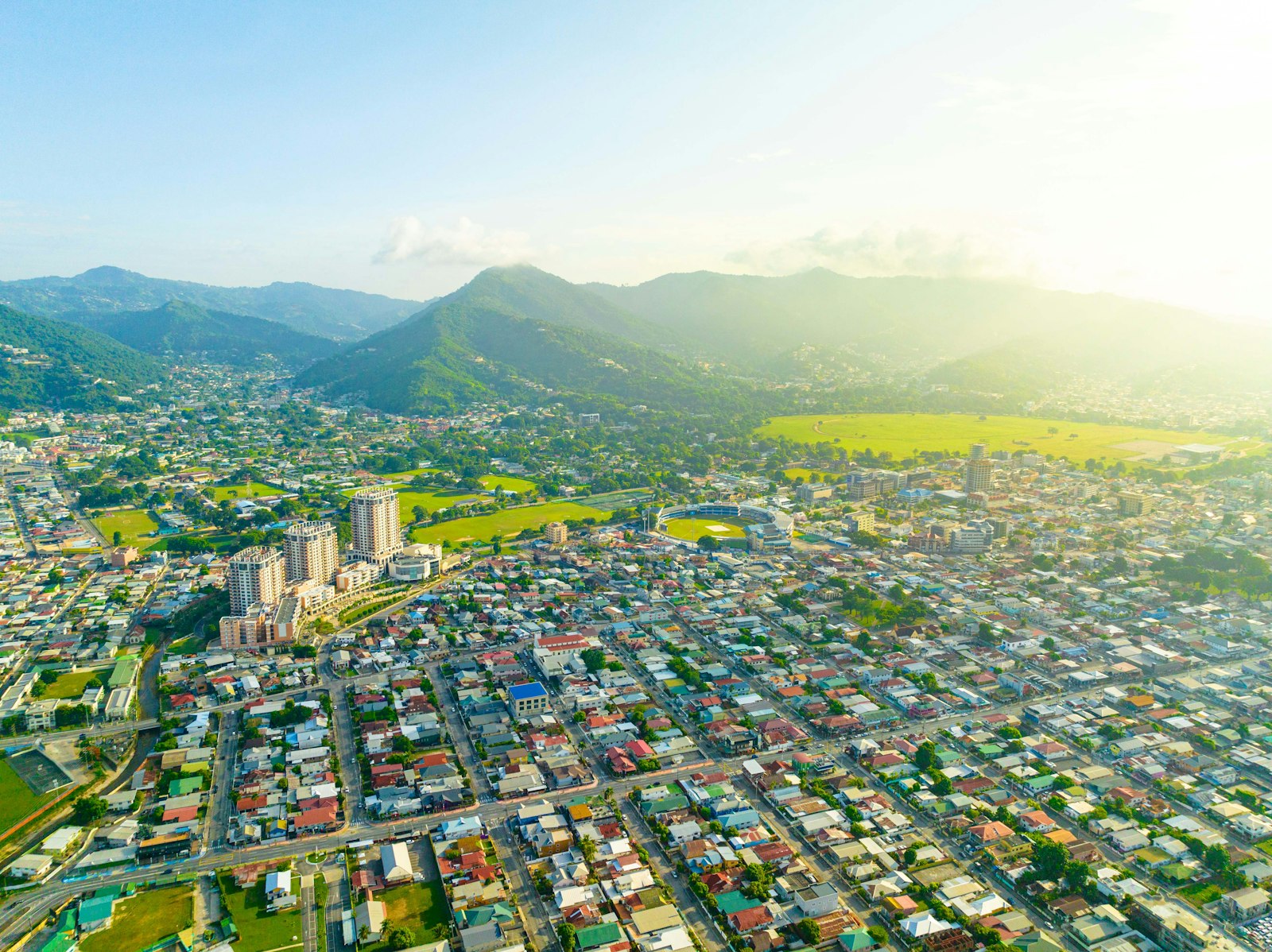
Trinidad and Tobago: Relocating and Buying Guide
Trinidad and Tobago lets foreigners buy up to one acre of home land in Trinidad without a licence, but any land in Tobago needs one. It is an industrial economy, not a resort market, with no retirement or investor visa, as at October 2026.
Key takeaways
Buying rules: A foreigner may hold up to one acre of residential land, or five acres for business, in Trinidad without a licence. Any land in Tobago needs a licence, whatever its size.
Stamp duty: The buyer pays stamp duty in bands that start at nil up to TT$850,000 and reach 7.5% above TT$1,750,000.
Residency: Property ownership gives no right to live in the country. There is no retirement or digital nomad visa, and permanent residence is quoted after five years.
Economy: The economy is built on oil and gas, not tourism, so there is no resort rental market of the kind found on most other islands.
Dollars: US dollars are scarce, and a 2026 report says businesses wait at least three months to move foreign-exchange funds.
Legal framework
Trinidad and Tobago is an independent parliamentary republic and sets its own property, tax and immigration law. In practice, a foreign buyer needs a Trinidad and Tobago attorney, and in Tobago must make the purchase contract conditional on the licence being granted.
Key facts
Legal framework: Trinidad and Tobago is an independent parliamentary republic and sets its own property, tax and immigration law. (Verified)
Population: 1,367,764 (official mid-2025 estimate); United Nations-based estimates run to about 1.51 million (Disputed)
Area: about 5,128 km2: Trinidad about 4,828 km2 and Tobago about 300 km2 (Corroborated)
Capital: Port of Spain; largest municipality Chaguanas (Corroborated)
Foreign ownership in Trinidad: up to 1 acre for a home and 5 acres for trade or business without a licence; notice is still required (Foreign Investment Act, Chapter 70:07) (Corroborated)
Foreign ownership in Tobago: a licence is needed for any land regardless of size (Legal Notice 53 of 2007, effective 16 February 2007); one licensed residential parcel, one house, no subdivision (Corroborated)
Stamp duty (buyer pays): nil up to TT$850,000; 3% on the band to TT$1,250,000; 5% to TT$1,750,000; 7.5% above (Corroborated)
Currency: Trinidad and Tobago dollar, about TT$6.77 to the US dollar (September 2026) (Estimate)
Climate: drier season about January to May, wetter June to December; near the southern edge of the main hurricane belt (Corroborated)
Residency: no retirement visa and no digital nomad visa; permanent residence is quoted after five years of continuous lawful residence (Corroborated)
What Trinidad and Tobago is
Trinidad and Tobago is the southernmost country in the Caribbean, made up of two main islands: Trinidad, about 4,828 square kilometres, and Tobago, about 300. The capital is Port of Spain on Trinidad's west coast, and Chaguanas is the largest municipality. The official mid-2025 population estimate is 1,367,764, though United Nations-based trackers show about 1.51 million. Unlike most Caribbean countries, the economy is mainly industrial, built on oil and gas, which is why Trinidad is not a resort rental market. Tobago is the quieter, greener island, with beaches and coral reefs. The highest point is El Cerro del Aripo, at 940 metres in Trinidad's Northern Range. The country became independent in 1962 and a republic in 1976. The climate is tropical, with the drier season generally January to May. The country lies near the southern edge of the main hurricane belt, and the CIA World Factbook describes it as outside the usual path of hurricanes and tropical storms.
Can foreigners buy property in Trinidad and Tobago?
Yes, with a difference between the two islands. The Foreign Investment Act, Chapter 70:07, replaced the older Aliens (Landholding) Act in 1990. In Trinidad, a foreign individual or company may buy up to one acre for residential use and up to five acres for business without a licence, though notice is still required. Larger holdings need a licence from the Ministry of Finance. In Tobago, Legal Notice 53 of 2007 requires a licence for any land, regardless of size, effective 16 February 2007. A foreign investor may hold only one licensed residential parcel in Tobago, build one house on it and not subdivide it, according to a 2026 guide. The licence is meant to be decided within 20 working days, but a 2012 US State Department report noted that delays were common, and a 2026 guide says four to six months is typical. The Ministry of Finance advises making the contract conditional on the licence. Foreign buyers must also pay in an internationally traded currency and show proof of transfer, according to one agency.
What does buying cost?
The buyer pays stamp duty on the deed. For a house with land, the first TT$850,000 is exempt, then 3% on the band from TT$850,001 to TT$1,250,000, 5% on the band to TT$1,750,000 and 7.5% on the remainder. Legal fees are quoted at 1.5% to 2.5% of the price. The cost article for Trinidad and Tobago sets out the figures, the annual tax and the living costs.
Living there
Citizens of the US, UK, EU and Canada enter visa-free, generally for up to 90 days, and every traveller files an online arrival card. Staying longer needs a work permit, a family route or an extension, which is discretionary. The residency article for Trinidad and Tobago covers the options. A 2026 guide reports that foreign-exchange shortages make it hard to convert and move US dollars, so anyone paying in or earning in US dollars should ask their bank how the money will move.
Worked example: stamp duty on a TT$3,000,000 home
Stamp duty on TT$3,000,000 is nil on the first TT$850,000, 3% of TT$400,000 (TT$12,000), 5% of TT$500,000 (TT$25,000) and 7.5% of TT$1,250,000 (TT$93,750). The total is TT$130,750, about US$19,300 at TT$6.77 to the dollar. This is our calculation from the bands above, not a published total, and it assumes a buyer who is not claiming a first-time exemption.
Where sources disagree
Stamp duty: most sources give marginal bands (nil, 3%, 5%, 7.5%). One calculator site shows a flat 7% for individuals and 10% for companies. Ask the attorney which applies.
First-time buyer exemption: TT$1.5 million on the Inland Revenue Division's older FAQ and one guide, TT$2 million on another. Whether a non-resident foreigner qualifies is not settled in published guidance.
Population: 1,367,764 (official mid-2025) against about 1.51 million (UN-based). The official figure is used in the text.
Who this suits, and who it does not
Suits: Buyers who accept an industrial rather than resort economy, who can wait through a licensing process, and who have a plan for moving US dollars.
Does not suit: Anyone who needs a retirement or investor visa, a tourism-led rental market, or a fast closing, particularly in Tobago.
Questions and answers
Can foreigners buy property in Trinidad and Tobago?
Yes. In Trinidad a foreigner can buy up to one acre for a home, or five acres for business, without a licence. In Tobago every foreign land purchase needs a licence.
Do foreigners need a licence to buy land in Tobago?
Yes. Legal Notice 53 of 2007 requires a licence for any land in Tobago, regardless of size, and the contract should be conditional on it being granted.
How much is stamp duty in Trinidad and Tobago?
The buyer pays stamp duty in bands: nil to TT$850,000, then 3%, 5% and 7.5% on the higher bands. On TT$3,000,000 that is about TT$130,750, or about US$19,300.
Can you retire in Trinidad and Tobago?
There is no retirement visa or digital nomad visa. Long stays run through a work permit, a family route or discretionary extensions, and owning property does not give a right to live there.
Is Trinidad and Tobago in the hurricane belt?
The country lies near the southern edge of the main hurricane belt, and the CIA World Factbook describes it as outside the usual path of hurricanes and tropical storms.
Related guides
More on Trinidad and Tobago:
Similar guides for other islands:
Making the Move: A Practical Guide to Relocating to Dominica
Barbados: What Buying Property Costs
About the data
Figures are the latest available as of October 2026. Next review due April 2027.
This guide draws on 10 sources: 4 agency, adviser or other published source, 2 law or professional firm, 2 news or trade media, 1 official or institutional, 1 reference (Wikipedia).
1 figure(s) are marked Estimate and 1 Disputed; see Where sources disagree.
Fact statuses: Verified means stated by a primary or official source (Verified (see note) adds a caveat). Corroborated means several independent sources agree, but no primary source was found. Estimate means a single source, an agency figure or an asking price. Disputed means sources conflict. Calculated by Pan Caribbean means our own arithmetic from the figures shown.
Sources and checks
Lex Mundi: Foreign Investment Restrictions Guide, Trinidad and Tobago (law or professional firm)
Trinidad law firm: real estate and the Foreign Investment Act (law or professional firm)
US State Department: 2012 Investment Climate Statement (official or institutional)
Rio Times: buying property in Trinidad and Tobago as a foreigner (news or trade media)
Rio Times: Trinidad and Tobago visa and residency (news or trade media)
Terra Caribbean: Trinidad buying guides (agency, adviser or other published source)
Jarnias: real estate laws in Trinidad and Tobago (agency, adviser or other published source)
Who's Who in Trinidad and Tobago Business: fast facts (agency, adviser or other published source)
Caribsurf: Trinidad and Tobago facts (agency, adviser or other published source)
Wikipedia: Trinidad and Tobago (reference (Wikipedia))
About Pan Caribbean
Pan Caribbean is a property listing portal and market data platform covering 23 markets across the Caribbean. Buyers, investors, agents and developers can search, compare and research property throughout the region, all in one place.
This guide gives general information, not legal, tax or financial advice. Pan Caribbean is not an estate agent or broker and does not act in any sale or purchase. Confirm the details with a licensed local adviser before acting.
Explore related blogs
View All
Curaçao: Relocating and Buying Property Guide
Relocation Guides
Aruba: Relocating and Buying Property Guide
Relocation Guides
Saint-Martin: Relocating and Buying Property Guide
Relocation Guides
Anguilla: Relocating and Buying Property Guide
Relocation Guides
Looking for Properties?
Browse homes that match your needs and budget with expert support and personalized advice to help you find your perfect Caribbean property. Get started within 5 days for quality advice to begin searching.