Saint-Martin:
Relocating and Buying Property Guide
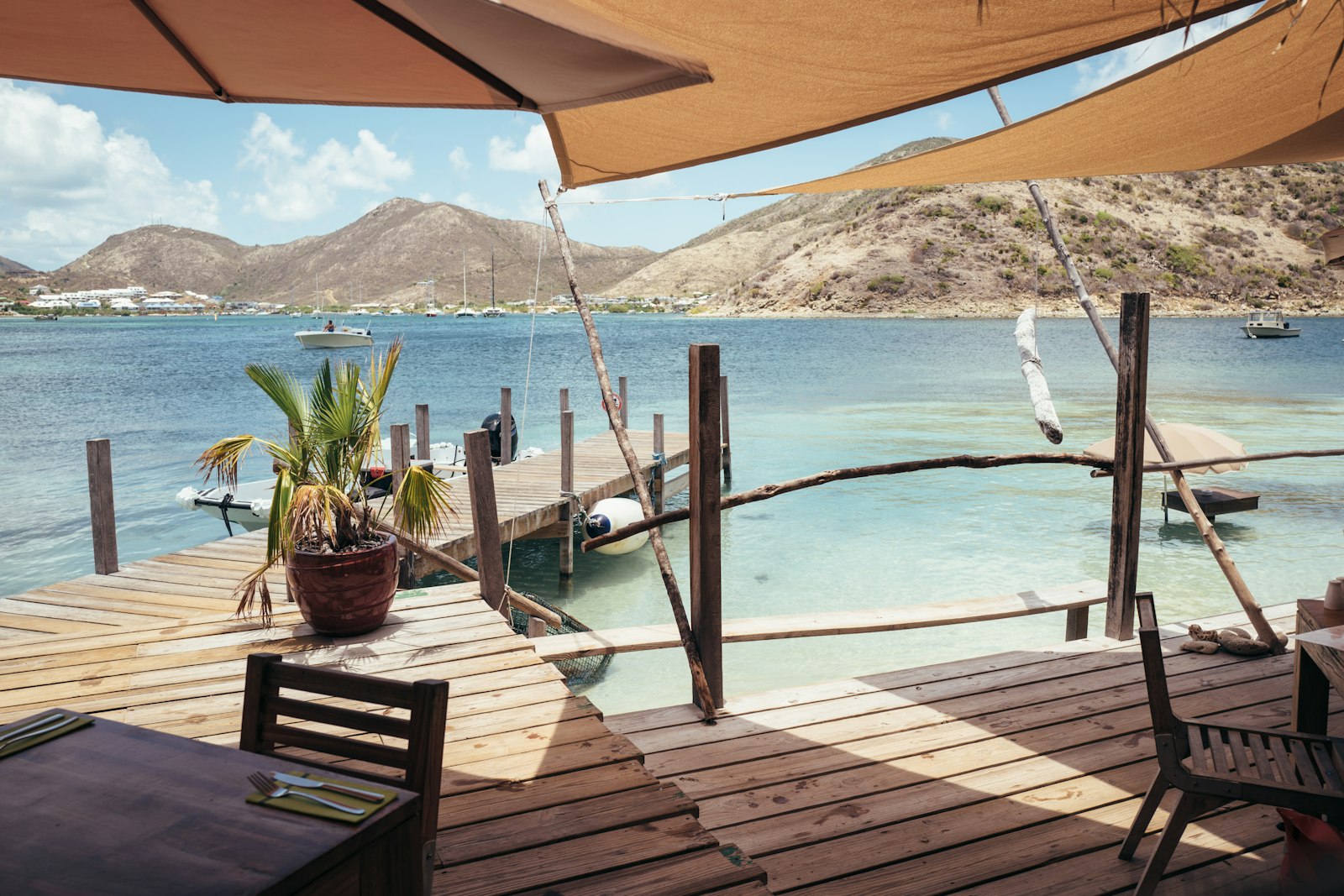
Saint-Martin: Relocating and Buying Property Guide
Saint-Martin, the French side of the island, needs no licence for foreign buyers, but registration duty is listed at 8% plus notary fees. It has its own tax code and uses the euro, as at October 2026.
Key takeaways
Foreign buyers: Foreigners buy the same way as French buyers, through a French notaire, in euros, with no licence or local partner needed.
Buying cost: The Collectivité's tax office lists an 8% registration duty, and agencies put the total with notary fees at about 9% to 10%, against about 5.5% on the Dutch side.
Own tax code: Saint-Martin has its own tax code, with no wealth tax and no VAT, but a general turnover tax (TGCA), registration duties and a real estate gains tax.
Two sides: The French and Dutch sides share one island with no border, but different laws, currencies and costs.
Hurricane Irma: Irma damaged 95% of the collectivity's buildings in September 2017, according to the European Commission.
Legal framework
Saint-Martin, the French side of the island, is a French overseas collectivity (since 2007) and an outermost region of the European Union. The euro is the currency and the collectivity has its own tax code. It is outside the Schengen Area and the EU VAT area. In practice, a notaire handles the sale in euros, and a buyer should take advice on the tax position in the Collectivité as well as at home, because the rules differ from mainland France.
Key facts
Legal framework: Saint-Martin, the French side of the island, is a French overseas collectivity (since 2007) and an outermost region of the European Union. The euro is the currency and the collectivity has its own tax code. It is outside the Schengen Area and the EU VAT area. (Verified)
Island and area: the island is 87 km2, of which 53 km2 is French; the other part is St Maarten (Verified)
Population: 31,160 on the French side (INSEE 2023 reference population, in force from 1 January 2026); 35,334 in 2017 (Corroborated)
Status: overseas collectivity since 15 July 2007, when it separated from Guadeloupe; capital Marigot (Corroborated)
Foreign ownership: no licence needed; foreigners buy through a French notaire in euros (Corroborated)
Registration duty: 8% (listed by the Collectivité's tax office, according to one agency), plus notaire fees; about 9% to 10% in total (Estimate)
Annual property tax: taxe fonciere, based on cadastral value (Corroborated)
Seasonal rental tax: 4% TGCA on seasonal rentals; a main residence can be rented up to 120 days a year after declaring to the Collectivite (Estimate)
Capital gains on resale: taxed under Saint-Martin's own code with reductions for each year held; older agency pages quote 33.5% or 35% (Disputed)
Hurricane Irma: damaged 95% of the collectivity's buildings in September 2017; reconstruction was still ongoing in 2024 (Verified)
What Saint-Martin is
Saint Martin is a single island of 87 square kilometres, split since 1648 between France in the north, 53 square kilometres, and the Netherlands in the south. The French side is the Collectivity of Saint-Martin, an overseas collectivity of France since 15 July 2007, when it separated from Guadeloupe. Marigot is the capital. INSEE's 2023 reference population, in force from 1 January 2026, is 31,160, down from 35,334 in 2017, before Hurricane Irma. The currency is the euro, and the main airport, Princess Juliana, is on the Dutch side, while Grand Case-Espérance handles regional flights. There is no border between the two sides, but they have different laws, as the St Maarten guides on Pan Caribbean explain.
Can foreigners buy property in Saint-Martin?
Yes, freely. A foreign buyer purchases the same way as a French one, through a French notaire and in euros, according to a 2026 agency guide, and no licence, residence or local partner is needed. The Collectivité's tax office lists an 8% registration duty, and notaire fees come on top, so total closing costs are commonly put at about 9% to 10%. Older agency pages say 10% to 10.5%. On the Dutch side, by comparison, closing costs are about 5.5%. A notary firm that works across Saint-Barthélemy and Saint-Martin warns that the tax rules are different from mainland France, and says an investor's tax position depends on whether they are tax resident in France, Saint-Martin or elsewhere, so advice from a notary in the territory is prudent.
Taxes and running costs
Saint-Martin has its own tax code. A notary firm says there is no wealth tax, a lighter income tax and no VAT, but there is a general turnover tax, the TGCA, along with registration duties and a real estate gains tax. Owners pay an annual taxe foncière based on cadastral value. One agency says seasonal rentals bear 4% TGCA and a main residence can be rented up to 120 days a year if declared to the Collectivité first. Capital gains are taxed under the local code with reductions for each year held, though older pages quote 33.5% or 35%. The cost article for Saint-Martin covers the figures.
Living there
French and EU rules on entry and residence apply as in the other French territories, but the details differ between Saint-Martin and the overseas departments, so check the France-Visas portal for your nationality. The French government's guidance confirms that the French overseas territories are outside Schengen. Irma damaged 95% of the collectivity's buildings in 2017, and the EU has funded reconstruction. Check any building's repair and insurance history.
Worked example: registration duty on a EUR 1,000,000 purchase
Registration duty at 8% on EUR 1,000,000 is EUR 80,000. With notaire fees, agencies put the total at about 9% to 10%, or EUR 90,000 to EUR 100,000. This is our calculation from the figures above, not a published total, and the notaire will give the exact amount.
Where sources disagree
Closing costs: about 9% to 10% (a 2026 agency guide, using 8% duty plus fees) against about 10% to 10.5% on older agency pages. The notaire's quote governs.
Capital gains: reductions for each year held under Saint-Martin's own code (a 2026 guide) against a flat 33.5% or 35% on older pages. Ask a notaire in the territory.
Population: 31,160 (INSEE 2023, in force 2026) against older figures of 35,334 to 37,264. The INSEE figure is used.
Who this suits, and who it does not
Suits: Buyers comfortable with French administration, who want the French side's restaurants and villa areas and can handle a higher closing cost than on the Dutch side.
Does not suit: Buyers who want the lowest closing costs, a licence-free route in a simple common-law system, or tax rules identical to mainland France.
Questions and answers
Can foreigners buy property in Saint-Martin?
Yes. Foreigners buy the same way as French buyers, through a French notaire in euros, with no licence or local partner required.
How much are closing costs in Saint-Martin?
The Collectivité's tax office lists an 8% registration duty plus notaire fees, and agencies put the total at about 9% to 10%, against about 5.5% on the Dutch side.
Does Saint-Martin have its own tax code?
Yes. Since becoming an overseas collectivity in 2007, it has its own tax code, with no wealth tax and no VAT, but a general turnover tax (TGCA) and registration duties.
What is the difference between Saint-Martin and St Maarten?
Saint-Martin is the French side, with the euro and French law. St Maarten is the Dutch side, an autonomous country in the Kingdom of the Netherlands. They share one island with no border.
Was Saint-Martin affected by Hurricane Irma?
Yes. Irma struck in September 2017 and damaged 95% of the collectivity's buildings, according to the European Commission.
Related guides
More on Saint-Martin:
Similar guides for other islands:
St Maarten: Relocating and Buying Property Guide
Making the Move: A Practical Guide to Relocating to Guadeloupe
About the data
Figures are the latest available as of October 2026. Next review due April 2027.
This guide draws on 9 sources: 5 agency, adviser or other published source, 2 official or institutional, 1 law or professional firm, 1 reference (Wikipedia).
2 figure(s) are marked Estimate and 1 Disputed; see Where sources disagree.
Fact statuses: Verified means stated by a primary or official source (Verified (see note) adds a caveat). Corroborated means several independent sources agree, but no primary source was found. Estimate means a single source, an agency figure or an asking price. Disputed means sources conflict. Calculated by Pan Caribbean means our own arithmetic from the figures shown.
Sources and checks
Andreu Realty: can foreigners buy property in St Maarten and St Martin (agency, adviser or other published source)
Andreu Realty: Sint Maarten and Saint-Martin island guide (agency, adviser or other published source)
Ricour-Brunier notaries: Saint-Barthelemy and Saint-Martin (law or professional firm)
European Commission: regional fiche, Saint-Martin (official or institutional)
Business France: visas and residence permits (official or institutional)
About SXM: Saint Martin population (agency, adviser or other published source)
7th Heaven Properties: buying in St Maarten and St Martin (agency, adviser or other published source)
Century 21 St Maarten: Saint Martin or Sint Maarten (agency, adviser or other published source)
Wikipedia: Saint Martin (island) (reference (Wikipedia))
About Pan Caribbean
Pan Caribbean is a property listing portal and market data platform covering 23 markets across the Caribbean. Buyers, investors, agents and developers can search, compare and research property throughout the region, all in one place.
This guide gives general information, not legal, tax or financial advice. Pan Caribbean is not an estate agent or broker and does not act in any sale or purchase. Confirm the details with a licensed local adviser before acting.
Explore related blogs
View All
Curaçao: Relocating and Buying Property Guide
Relocation Guides
Aruba: Relocating and Buying Property Guide
Relocation Guides
Anguilla: Relocating and Buying Property Guide
Relocation Guides
Trinidad and Tobago: Relocating and Buying Guide
Relocation Guides
Looking for Properties?
Browse homes that match your needs and budget with expert support and personalized advice to help you find your perfect Caribbean property. Get started within 5 days for quality advice to begin searching.