Can Foreigners Buy in Dominica?
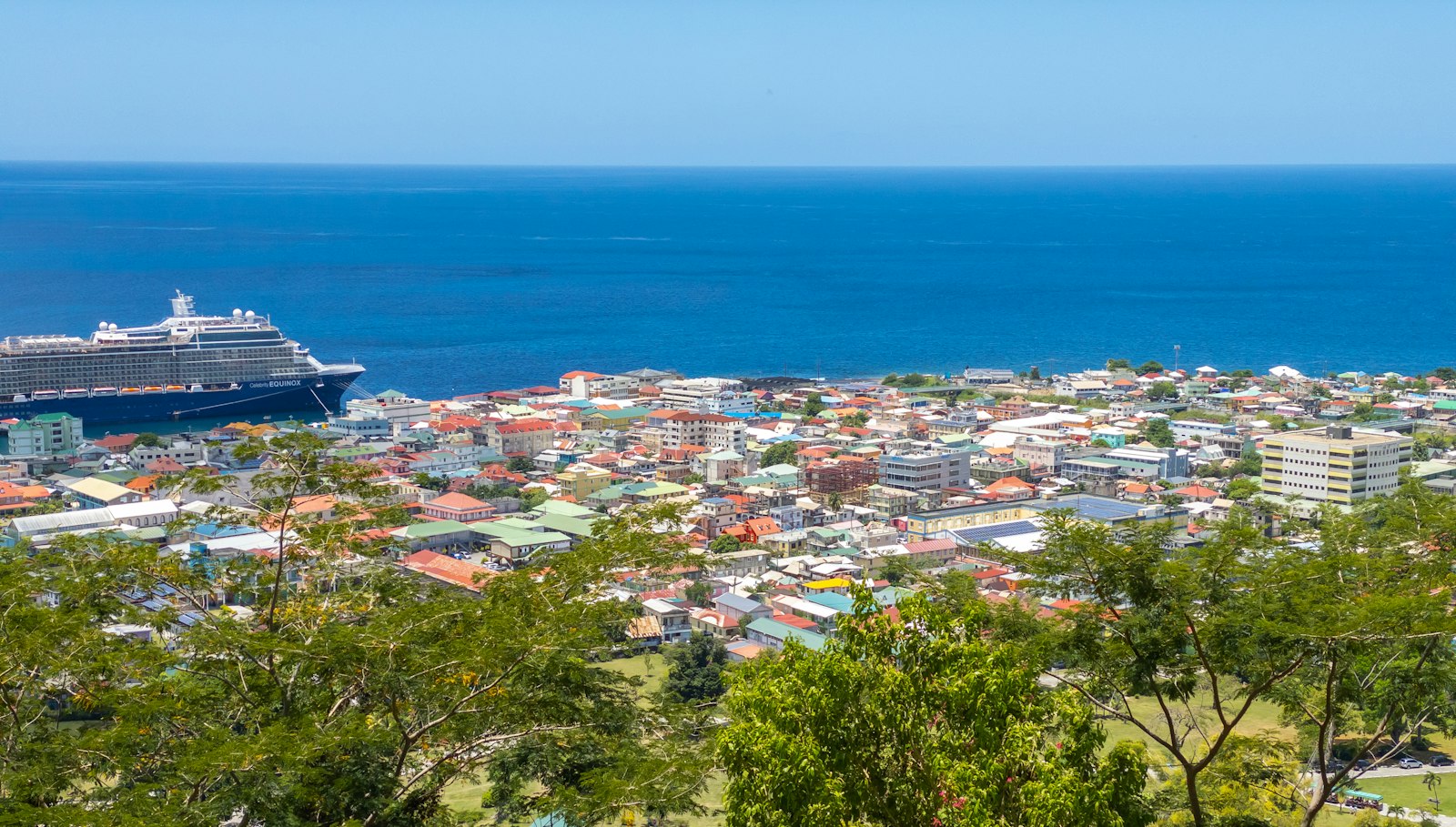
Can Foreigners Buy in Dominica?
Yes, foreigners can buy property in Dominica, the independent nation between Guadeloupe and Martinique. Most buyers need an Alien Landholding Licence, and every buyer from outside the OECS pays a fee of 10% of the land's market value. With stamp duty and legal fees, buyer costs come to about 17% of the price, as at November 2026.
Key takeaways
Licence: a buyer who is not a citizen of an OECS member state needs a licence to hold more than 1 acre for a home or 3 acres for business.
Fee: the 10% Alien Landholders fee is payable on the market value of the land even when a small plot needs no licence.
Other costs: the buyer also pays 2% stamp duty, a 1% judicial fee, a 1% Assurance Fund fee and a solicitor's fee of about 2.5% plus VAT.
Citizenship: the citizenship by investment real estate option starts at US$200,000 in an approved project.
Our estimate: buyer-side costs on a US$500,000 purchase come to about US$84,431, or 16.9%, before valuation and survey.
Legal framework
Dominica is an independent nation and sets its own property, tax and immigration law. For a foreign buyer, the law that matters is the Aliens Land Holding Regulation Act, No. 17 of 1995, as amended in 2015 and 2018: land held without the licence it requires can be forfeited to the State, so the licence and the fee are settled before completion.
Key facts
Legal framework: Dominica is an independent nation that sets its own property, tax and immigration law (Verified)
Who counts as an alien: anyone who is not a citizen of an OECS member state, including companies they control (Verified)
When a licence is needed: to hold more than 1 acre for a home or more than 3 acres for business (Verified)
Licence fee: 10% of the value of the land, payable even on a plot small enough to need no licence (Verified)
Base of the fee: market value in the Act and on Invest Dominica, against the greater of value or price on one agency site (Disputed)
Application fee: EC$150 (about US$56) (Verified (see note)). Note: this is the figure in the 1995 Act; the 2015 and 2018 amendments could not be read.
Buyer's stamp duty: 2% (Verified)
Seller's stamp duty: 2.5% (Verified)
Judicial fee and Assurance Fund: 1% each (Verified)
Solicitor's fee: 2.5% plus 15% VAT on Invest Dominica, against 3% on one agency site (Disputed)
Citizenship by investment: at least US$200,000 in an approved project, held 3 years from the grant of citizenship (Verified)
Currency: EC$2.70 to US$1, fixed since 7 July 1976 (Verified)
Who needs the Alien Landholding Licence?
In Dominica in 2026, an alien is anyone who is not a citizen of a member state of the Organisation of Eastern Caribbean States, so American, British, Canadian and European buyers all count, as do companies they control. Citizens of OECS states such as Saint Lucia, Grenada or Antigua and Barbuda do not. No difference between US, UK and Canadian buyers was found. The licence itself depends on the size of the land. Invest Dominica, the government's investment agency, says an alien can hold under 1 acre for a home, or under 3 acres for business, without a licence, but must still pay the 10% fee. Above those sizes, a licence is needed first. The Minister can also name areas, by notice in the Gazette, where even a small commercial plot needs one. The licence is granted for one property and one owner and cannot be transferred, so a later buyer of the same house applies again.
How the application works
According to Invest Dominica, a buyer can apply for the licence only after placing a deposit, usually 10% of the price, on a specific property. The application includes a land plan prepared by a licensed surveyor. A licensed surveyor also values the property, and the transfer and legal fees are worked out on that valuation or on the price, whichever is higher. Once the licence is granted, the law requires it to be noted on the title. Dominica registers land under the Title by Registration Act, and the government's lands service issues a Certificate of Title, with one copy kept at the Registry in Roseau. No official processing time for the licence was found, so ask the attorney for a timetable before agreeing a completion date with the seller.
What the licence and taxes cost
In Dominica the 10% fee is the largest single buyer cost. Invest Dominica lists, for a non-citizen buyer: the 10% Alien Landholders fee, 2% stamp duty, a 1% judicial fee, a 1% Assurance Fund fee and a solicitor's fee of 2.5%, with 15% VAT on that fee if the lawyer is VAT-registered. Valuation and survey fees are extra. The seller pays 2.5% stamp duty. For comparison, Antigua and Barbuda's licence duty is set at 7% of market value in its 2020 law. Deloitte's 2026 summary says Dominica has no capital gains tax and no national property tax, though city and village councils charge a municipal tax. No official municipal rate was read, so none is given here.
Worked example: buyer costs on a US$500,000 purchase in Dominica
A US$500,000 purchase is EC$1,350,000 at the fixed rate of EC$2.70 to US$1. This assumes the valuation is not higher than the price.
Alien Landholders fee at 10%: US$50,000.
Application fee: EC$150, about US$56.
Stamp duty at 2%: US$10,000.
Judicial fee at 1%: US$5,000.
Assurance Fund at 1%: US$5,000.
Solicitor's fee at 2.5%: US$12,500, plus VAT at 15%: US$1,875.
Total: US$50,000 + US$56 + US$10,000 + US$5,000 + US$5,000 + US$12,500 + US$1,875 = US$84,431, or about 16.9% of the price.
Valuation and survey fees come on top. This is our calculation from the figures above, not a published total.
Citizenship by investment and the 10% fee
Dominica's Citizenship by Investment Unit sets a minimum of US$200,000 for a unit in an approved project. The property must be held for three years from the grant of citizenship, or five years if it is sold to another citizenship applicant. Once a buyer becomes a citizen of Dominica, an OECS member state, they are no longer an alien under the 1995 Act. Two advisers say the 10% fee is waived on approved projects, but the official citizenship pages read for this guide do not mention it, so confirm it with the attorney and the developer in writing. In October 2025 Dominica's Parliament passed the bill creating a regional regulator for citizenship by investment programmes, shared with four other Eastern Caribbean states.
Where sources disagree
Base of the 10% fee: the 1995 Act and Invest Dominica say the market value of the land; 7th Heaven Properties says the value or the price, whichever is greater; Global Citizen Solutions says generally the purchase price. Ask the attorney which figure will be assessed.
Legal and judicial fees: Invest Dominica gives 2.5% for the solicitor and 1% judicial fees; 7th Heaven Properties gives 3% and 2.5%. Ask the attorney for a written fee quote before signing.
Who this suits, and who it does not
Dominica suits a buyer of a modest home on under an acre who accepts a one-off cost of about 17% of the price in exchange for no national property tax and no capital gains tax. It also suits a buyer already planning citizenship by investment through an approved project.
It suits less well a buyer who expects to sell within a few years, because the entry costs are high and a later foreign buyer pays them again. It also suits less well anyone who needs a fixed completion date, as no official processing time is published.
Questions and answers
Can foreigners buy property in Dominica?
Yes. A buyer from outside the OECS needs an Alien Landholding Licence for more than 1 acre for a home or 3 acres for business, and pays a 10% fee on the land's value in every case.
How much does it cost a foreigner to buy property in Dominica?
About 17% of the price on top of it: the 10% fee, 2% stamp duty, 1% judicial fee, 1% Assurance Fund and about 2.5% legal fees plus VAT, according to Invest Dominica.
Do US, UK or Canadian citizens need the licence in Dominica?
Yes, above the size limits. No difference between these nationalities was found. Citizens of OECS member states are not treated as aliens.
Does Dominica charge property tax?
There is no national property tax, according to Deloitte, but town and village councils charge a municipal tax. There is no capital gains tax.
Is Dominica the same as the Dominican Republic?
No. Dominica is a separate English-speaking island nation in the Eastern Caribbean, with its own laws and the EC$ as its currency.
Related guides
More on Dominica
What Buying and Living in Dominica Costs: A 17% Buyer Bill and Low Local Rents
Citizenship by Investment in Dominica 2026: Costs, Holding Period and the ECCIRA Question
Best Areas to Buy in Dominica: Roseau, Portsmouth, the South, the West Coast and the North
Similar guides for other islands
About the data
Figures are the latest available as of November 2026. Next review due February 2027.
This guide draws on 10 sources: 7 official or institutional, 2 adviser and 1 agency.
0 figures are marked Estimate and 2 Disputed; see Where sources disagree.
No prices are quoted. The worked example uses an illustrative price.
The 1995 Act was read in the copy published on FAOLEX. The 2015 and 2018 amending Acts could not be read beyond their cover pages, so a change to the application fee or the exemptions in those Acts cannot be ruled out. The fee list follows Invest Dominica, the government's investment agency.
Fact statuses: Verified means stated by a primary or official source (Verified (see note) adds a caveat). Corroborated means several independent sources agree, but no primary source was found. Estimate means a single source, an agency figure or an asking price. Disputed means sources conflict. Calculated by Pan Caribbean means our own arithmetic from the figures shown.
Sources and checks
Researched November 2026. Next review due February 2027.
Aliens Land Holding Regulation Act, No. 17 of 1995 (FAOLEX copy) (official or institutional)
Invest Dominica Authority: buying property and the Alien Land Holding Licence (official or institutional)
Government of Dominica: how to obtain a first Certificate of Title (official or institutional)
Citizenship by Investment Unit: real estate option (official or institutional)
Citizenship by Investment Unit: frequently asked questions (official or institutional)
Office of the Prime Minister press room: Parliament passes ECCIRA bill, 15 October 2025 (official or institutional)
Eastern Caribbean Central Bank: 50 years of the EC dollar peg (official or institutional)
Deloitte: Dominica Highlights 2026 (adviser)
Global Citizen Solutions: Dominica real estate, 28 August 2026 (adviser)
About Pan Caribbean
Pan Caribbean is a Caribbean property marketplace covering 23 markets: 11 independent nations and 12 overseas territories. It gives buyers clear, sourced information on each market, including prices, residency, buying costs and daily life, and offers information and consultancy services on the market to developers and investors.
This guide gives general information, not legal, tax or financial advice. Pan Caribbean is not an estate agent or broker and does not act in any sale or purchase. Confirm the details with an independent licensed professional before acting.
Explore related blogs
View All
Can Foreigners Buy in Antigua and Barbuda?
Buying Process: Legal, Tax & Financing
Can Foreigners Buy in Saint-Martin (French Side)?
Buying Process: Legal, Tax & Financing
Can Foreigners Buy in St Vincent and the Grenadines?
Buying Process: Legal, Tax & Financing
Legal, Tax and Financing Basics for Buying in the US Virgin Islands
Buying Process: Legal, Tax & Financing
Looking for Properties?
Browse homes that match your needs and budget with expert support and personalized advice to help you find your perfect Caribbean property. Get started within 5 days for quality advice to begin searching.