Can Foreigners Buy in The Bahamas?
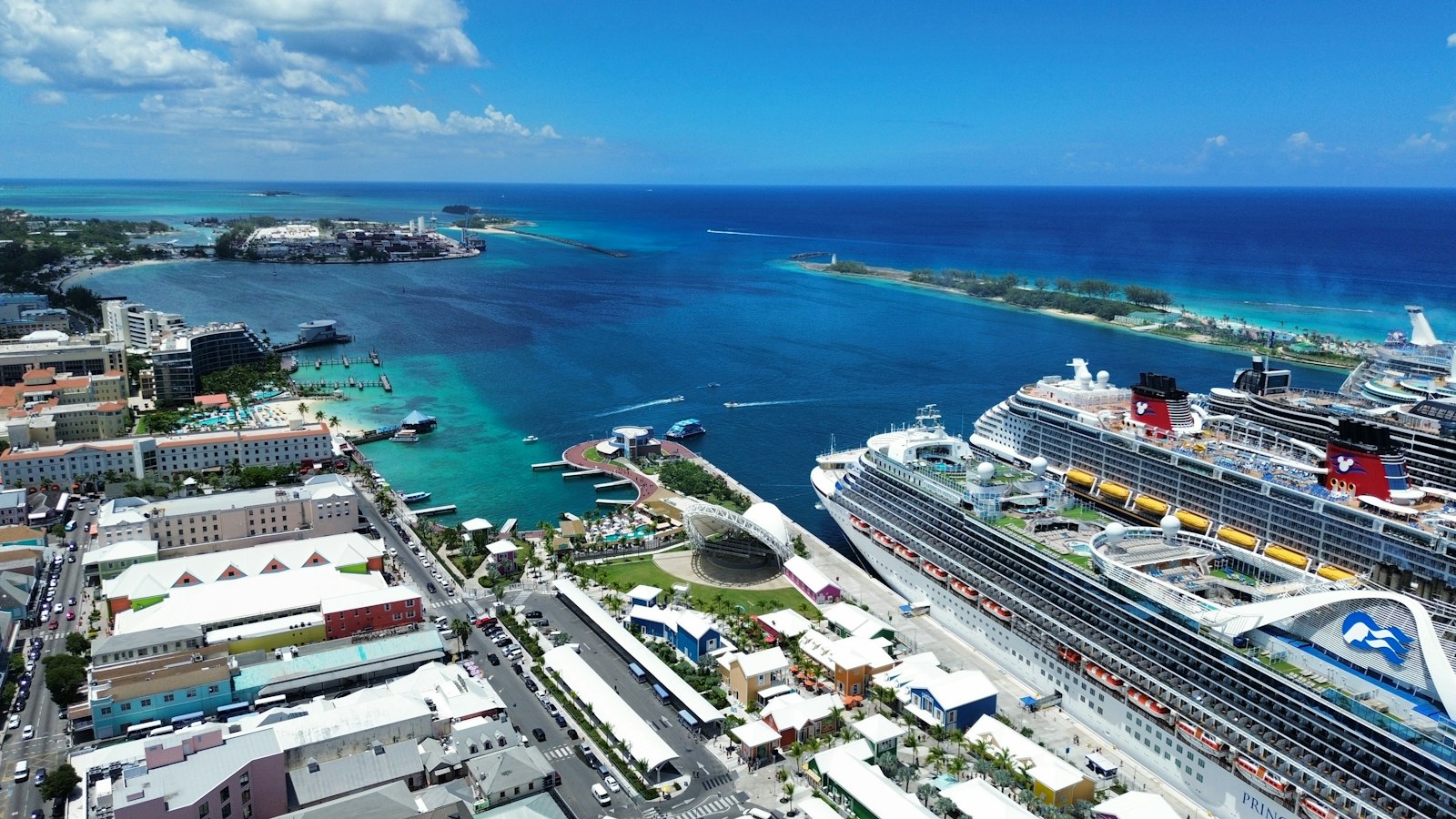
Can Foreigners Buy in The Bahamas?
Yes, foreigners can buy property in The Bahamas, the independent nation north of Cuba. A home to live in needs only a Certificate of Registration under the International Persons Landholding Act. A foreign buyer's purchase carries VAT at a flat 10%, usually split with the seller, as at November 2026.
Key takeaways
Registration: a foreign buyer of a home, a condominium or a plot to build a home on registers the purchase and does not need a permit.
Permit: investment, commercial and larger land purchases need a permit, and a purchase without one is void.
VAT: transfers to foreign buyers carry VAT at a flat 10%, by custom shared equally between buyer and seller.
Annual tax: since 1 July 2026 a foreign owner who lives in the home with a residence permit pays 0.625% a year on the first US$1,000,000 of its value and 1% above.
Residence: economic permanent residence starts at a US$1,000,000 investment held for 10 years.
Legal framework
The Bahamas is an independent nation and sets its own property, tax and immigration law. For a foreign buyer, the law that matters is the International Persons Landholding Act of 1993: a deed recorded without the certificate or permit it requires is void, so the attorney obtains it before completion.
Key facts
Legal framework: an independent nation that sets its own property, tax and immigration law (Verified)
Home to live in: a Certificate of Registration, not a permit, for a home, a condominium or a plot to build one (Verified)
Land size that needs a permit: two or more contiguous undeveloped acres in the amended Act, against five acres on several agency sites (Disputed)
Other purchases: a permit from the Investments Board; without it the purchase is void (Verified)
Certificate and permit fees: US$250 and US$500 in the 2007 fee schedule, against US$1,000 each in a law-firm guide (Disputed)
VAT on the transfer: a flat 10% for foreign buyers since 1 July 2023 (Corroborated)
Who pays the VAT: by custom, half each, buyer and seller (Corroborated)
Annual tax, foreign owner-occupier with a permit: 0.625% on the first US$1,000,000 of value and 1% above, capped at US$200,000 a year, from 1 July 2026 (Verified)
Annual tax, vacant land owned by a foreigner: US$100 on the first US$7,000 of value, then 2% (Verified)
Legal fees: 2.5% of the first US$500,000 and 2% of the next US$500,000, plus 10% VAT (Estimate)
Economic permanent residence: at least US$1,000,000, held for at least 10 years (Verified)
Currency: B$1 equals US$1, fixed since 1973 (Verified)
Registration or permit: which do you need?
In The Bahamas in 2026, the answer depends on what the property is for. Under section 2 of the International Persons Landholding Act, a non-Bahamian buying a home to live in, a condominium, or a plot to build a home on applies to the Investments Board to register the purchase and receives a Certificate of Registration. Everything else, such as a rental investment, a commercial building or a large plot of undeveloped land, needs a permit, which the Board grants at its discretion. The size limit is disputed: the consolidated Act, amended in 2009, puts it at two or more contiguous acres of undeveloped land, while several agency sites still say five. A 2025 amendment, in force from 1 July 2025, lets a permit lapse if the land is not bought within 180 days, with up to two automatic 180-day extensions. A company counts as non-Bahamian if it is foreign, or if any of its shares is held by a non-citizen, so buying through a company does not avoid the Act. No difference between US, UK and Canadian buyers was found.
What VAT, fees and annual tax cost
The main transfer cost in The Bahamas is VAT. Lennox Paton, Graham Thompson and The Tribune agree that since 1 July 2023 a transfer to a foreign buyer carries VAT at a flat 10% whatever the price, while Bahamian buyers pay a lower banded rate. Deloitte's 2026 summary gives only one banded scale, so ask the attorney to confirm the rate on a provisional VAT invoice before closing. By custom buyer and seller share the VAT equally, but either can be pursued if it is unpaid. Legal fees on one agency's scale are 2.5% of the first US$500,000 and 2% of the next US$500,000, plus 10% VAT. Agent commission, 6% on homes and 10% on land, is paid by the seller.
Each year, a foreign owner who lives in the home and holds a residence or work permit or a Home Owner Resident Card pays 0.625% on the first US$1,000,000 of its value and 1% on the rest, capped at US$200,000 a year, under the Real Property Tax (Amendment) Act, 2026, in force from 1 July 2026. The bill had proposed a flat 0.625%, and some guides still quote it, but the Act as published in the Gazette has the two bands. A foreign-owned home that is let out pays 0.75% on the first US$500,000, 1% on the next US$1,500,000 and 1.5% above, according to the Department of Inland Revenue. Paying in full by 31 March earns a 10% discount.
Worked example: buyer costs on a US$800,000 home in The Bahamas
This assumes a foreign buyer who will live in the home, a registration certificate, VAT shared equally, and a value for tax equal to the price.
VAT at 10%: US$80,000, of which the buyer's half is US$40,000.
Legal fees: 2.5% of US$500,000 is US$12,500, plus 2% of US$300,000 is US$6,000, giving US$18,500, plus VAT at 10% of US$1,850: US$20,350.
Certificate of Registration: US$250 to US$1,000 (Disputed).
Total: US$40,000 + US$20,350 + US$250 = US$60,600, up to US$61,350 with the higher fee, or about 7.6% to 7.7% of the price.
If the buyer agrees to pay all the VAT, add US$40,000.
Annual property tax at 0.625%: US$5,000 a year.
This is our calculation from the figures above, not a published total.
Does buying a home give residence?
Owning a home gives the right to apply for an annual Home Owner Resident Card for the owner, spouse and minor children. The Department of Immigration asks for a US$200 processing fee and a US$10 stamp, and states no minimum property value. Permanent residence is a separate application: the economic route needs at least US$1,000,000 in real estate or Central Bank bonds, held for at least 10 years. The threshold was US$750,000 until 1 January 2025. The fee is US$20,000, or US$25,000 with the right to work in your own business. Lennox Paton put processing at 6 to 18 months in April 2026.
Where sources disagree
Land size that needs a permit: the amended Act and Lennox Paton say two or more contiguous undeveloped acres; several agency and news sites say five acres. Ask a Bahamian attorney.
Certificate and permit fees: the 2007 fee schedule says US$250 and US$500; Lennox Paton says US$1,000 each. Ask the attorney for the current fee.
Who this suits, and who it does not
The Bahamas suits a foreign buyer of a home to live in, who needs only registration and whose share of the transfer costs is usually about 8% when the VAT is split. It also suits a buyer planning permanent residence through a property of US$1,000,000 or more.
It suits less well an investor buying to let or a buyer of larger undeveloped land, who needs a discretionary permit, and a buyer who assumed foreign owners pay no annual tax, as the 2026 change charges resident foreign owners too.
Questions and answers
Can foreigners buy property in The Bahamas?
Yes. A home to live in, a condominium or a plot to build one needs only a Certificate of Registration. Investment and larger land purchases need a permit.
How much VAT does a foreigner pay when buying property in The Bahamas?
A flat 10% of the price since 1 July 2023, usually split equally between buyer and seller.
Do foreigners pay property tax in The Bahamas?
Yes. Since 1 July 2026 a foreign owner who lives in the home with a permit pays 0.625% a year on the first US$1,000,000 of value and 1% above, capped at US$200,000. Let homes and vacant land pay higher rates.
Does buying property in The Bahamas give residency?
It gives the right to apply for an annual Home Owner Resident Card. Permanent residence needs at least US$1,000,000 held for 10 years.
Related guides
More on The Bahamas
What Buying and Living in the Bahamas Actually Costs After the July 2026 Tax Change
Bahamas Residency by Investment: What Property Buyers Should Know
Renting Out Your Bahamas Property: Registration, VAT and the New Property Tax Class
Best Areas to Buy in the Bahamas: Nassau, Paradise Island, Grand Bahama and the Out Islands
Similar guides for other islands
About the data
Figures are the latest available as of November 2026. Next review due February 2027.
This guide draws on 16 sources: 9 official or institutional, 3 law firm, 2 adviser, 1 news and 1 agency.
1 figure is marked Estimate and 2 Disputed; see Where sources disagree.
No prices are quoted. The worked example uses an illustrative price.
The Act was read in the consolidated edition on FAOLEX (amended to 2009) and the 2025 amendment in its Gazette copy. The 2026 property tax change was read in the Act as published in the Official Gazette of 1 July 2026, which differs from the bill. The VAT Act was not read, so the 10% foreign-buyer rate rests on two law firms and a news report. Amounts are in US$ at the fixed rate of B$1 to US$1.
Fact statuses: Verified means stated by a primary or official source (Verified (see note) adds a caveat). Corroborated means several independent sources agree, but no primary source was found. Estimate means a single source, an agency figure or an asking price. Disputed means sources conflict. Calculated by Pan Caribbean means our own arithmetic from the figures shown.
Sources and checks
Researched November 2026. Next review due February 2027.
International Persons Landholding Act, Ch. 140, consolidated (FAOLEX copy) (official or institutional)
International Persons Landholding (Amendment) Act 2025, Official Gazette, 1 July 2025 (FAOLEX copy) (official or institutional)
Real Property Tax (Amendment) Act, 2026, No. 21 of 2026, Official Gazette, 1 July 2026 (official or institutional)
Real Property Tax (Amendment) Bill, 2026 (official or institutional)
Department of Inland Revenue: Real Property Tax FAQs (official or institutional)
Department of Immigration: permanent residence (official or institutional)
Department of Immigration: Home Owner Resident Permit (official or institutional)
Department of Immigration: fee scale (official or institutional)
Central Bank of The Bahamas: monetary policy objectives (official or institutional)
Lennox Paton on Legal 500: Bahamas real estate guide (law firm)
Graham Thompson in Chambers Real Estate 2026: The Bahamas (law firm)
Lennox Paton on Chambers: economic permanent residency in The Bahamas, 7 April 2026 (law firm)
Deloitte: Bahamas Highlights 2026 (adviser)
KPMG TaxNewsFlash: Bahamas tax measures in the 2026-2027 budget, 24 August 2026 (adviser)
Churchill and Jones Realty: sales commissions and costs (agency)
About Pan Caribbean
Pan Caribbean is a Caribbean property marketplace covering 23 markets: 11 independent nations and 12 overseas territories. It gives buyers clear, sourced information on each market, including prices, residency, buying costs and daily life, and offers information and consultancy services on the market to developers and investors.
This guide gives general information, not legal, tax or financial advice. Pan Caribbean is not an estate agent or broker and does not act in any sale or purchase. Confirm the details with an independent licensed professional before acting.
Explore related blogs
View All
Can Foreigners Buy in the British Virgin Islands?
Buying Process: Legal, Tax & Financing
Can Foreigners Buy in the Turks and Caicos Islands?
Buying Process: Legal, Tax & Financing
Can Foreigners Buy in Antigua and Barbuda?
Buying Process: Legal, Tax & Financing
Can Foreigners Buy in Dominica?
Buying Process: Legal, Tax & Financing
Looking for Properties?
Browse homes that match your needs and budget with expert support and personalized advice to help you find your perfect Caribbean property. Get started within 5 days for quality advice to begin searching.