Beyond Rodney Bay:
Saint Lucia's Pitons, Springs and Quieter Corners
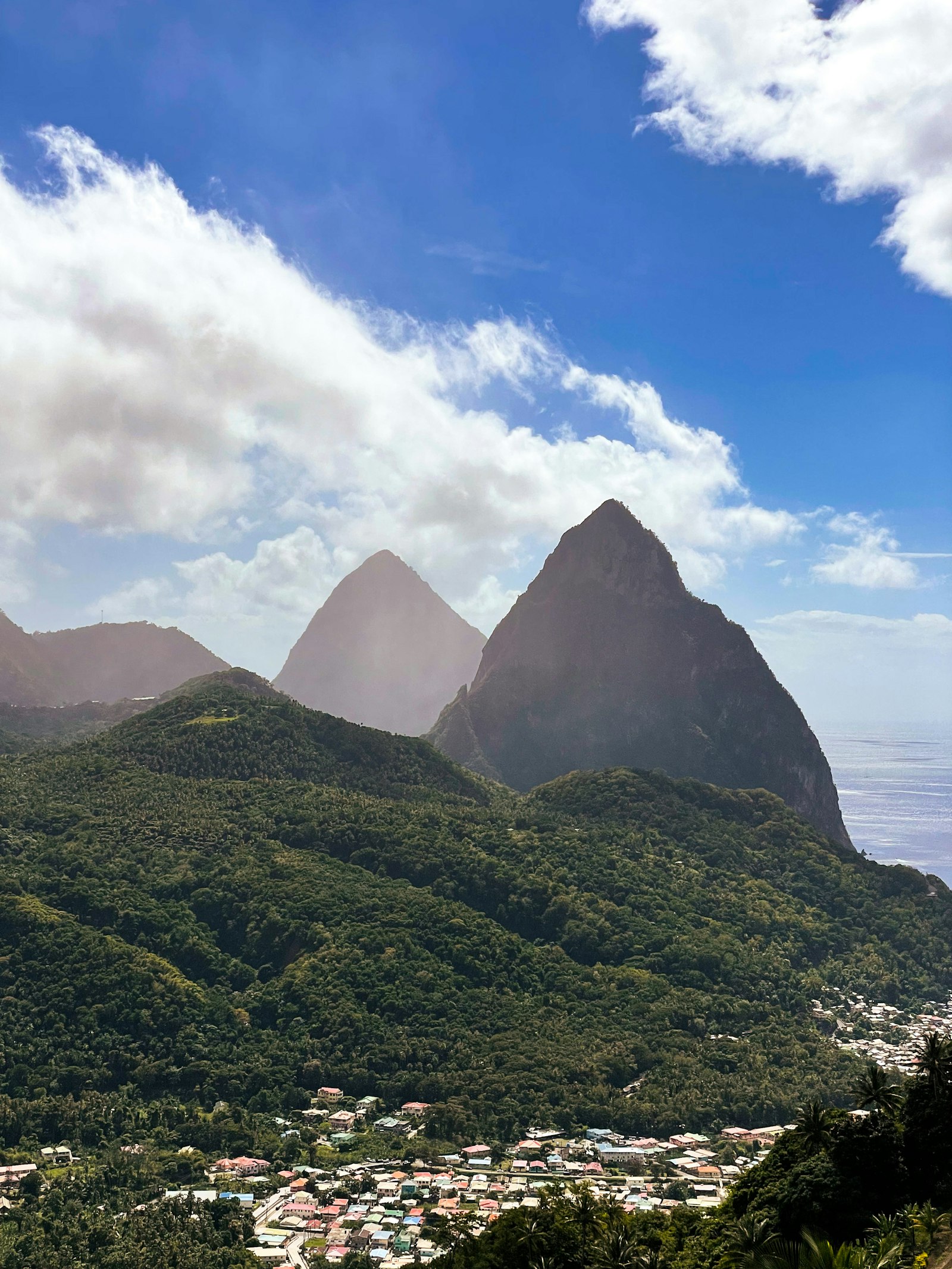
Beyond Rodney Bay: Saint Lucia's Pitons, Springs and Quieter Corners
Saint Lucia's property market tends to cluster around Rodney Bay, but most of what makes the island distinctive sits further south and in a few quieter spots in the north. These places also help a buyer test which part of the island suits them.
The Pitons and the Tet Paul trail
The twin volcanic peaks of Gros Piton and Petit Piton rise out of the sea near Soufrière and are a UNESCO World Heritage site. Climbing Gros Piton needs a guide, and guides say it is demanding. A gentler option is the Tet Paul Nature Trail, a short, community-managed walk that gives views of both peaks without much effort. It suits visitors who want the scenery and not the full climb.
Sulphur Springs and Diamond Falls
Near Soufrière, Sulphur Springs is a geothermal area with mud baths, marketed as the world's only drive-in volcano, a tourism claim, not a scientific one. Nearby, the Diamond Falls Botanical Gardens has a waterfall about 17 metres high whose waters are laced with minerals, because part of its stream comes from rainwater fed through the Sulphur Springs area, according to one listing. Fond Doux Estate, a restored cocoa plantation, offers guided tours and is a reminder that agriculture still shapes this part of the island.
Anse Chastanet and Anse Mamin
Anse Chastanet, near Soufrière, has dark volcanic sand and a coral reef that makes it one of the island's better snorkelling and diving spots, with the Pitons as a backdrop. A short walk away, Anse Mamin is a quieter black-sand beach. These are on the southwest coast, a very different atmosphere from the resort strip in the north.
Pigeon Island
At the northern tip near Rodney Bay, Pigeon Island National Landmark was once a pirate hideout and later a British naval base. It combines ruins with a hike to Signal Peak for panoramic views and a beach. It is the easiest of these places to reach from the northern property areas, and a useful day out for anyone based there.
Marigot Bay
On the west coast south of Castries, Marigot Bay is a sheltered harbour popular with yachts. Exploring by kayak or boat leads to quieter coves, according to one local guide. It lies on the west coast between Castries and Soufrière.
Why this matters for a buyer
The north offers entertainment, restaurants and the island's busiest rental market, covered earlier in this series. The southwest offers scenery, a slower pace and generally lower entry prices. Spending a few days in Soufrière, walking one of these trails and then driving north shows how different the two feel, and the drive itself shows how long a trip between them takes. Opening hours, fees and guide requirements change, so check them before you go.
Explore related blogs
View All
Renting Out Your Turks and Caicos Property: Licences, the 12% Tax and Tighter Enforcement
Investment Strategies
Renting Out Your Bahamas Property: Registration, VAT and the New Property Tax Class
Investment Strategies
Best Areas to Buy in St Vincent and the Grenadines: Villa, Bequia, Union Island and Beyond
Investment Strategies
Looking for Properties?
Browse homes that match your needs and budget with expert support and personalized advice to help you find your perfect Caribbean property. Get started within 5 days for quality advice to begin searching.