Gwoka, Carnival and a Storm Record:
Everyday Life in Guadeloupe
Gwoka, Carnival and a Storm Record: Everyday Life in Guadeloupe
Guadeloupe is a French department, and daily life shows it in the language, the bakeries and the euro. The culture that defines it, though, is Creole, built around a drum, a carnival and a kitchen that mixes French, African, Indian and Caribbean traditions.
Key facts
French is the language of administration, and Guadeloupean Creole is spoken by almost everyone.
UNESCO placed gwoka, the drum, song and dance tradition, on its intangible heritage list in 2014.
Carnival begins in early January and runs for about two months, ending on Ash Wednesday.
Hurricane Hugo crossed Grande-Terre in September 1989, and Tropical Storm Fiona brought 534 millimetres of rain to Saint-Claude in 2022.
Language
French is the language of administration, schools and the courts. Guadeloupean Creole, a French-based Creole with West African grammatical structures, is spoken by almost everyone, and a country guide says it differs enough from Martinican Creole that speakers hear the border immediately. Anyone planning to live there should expect to need French, especially with officials, as the relocation and residency articles in this series explain.
Gwoka
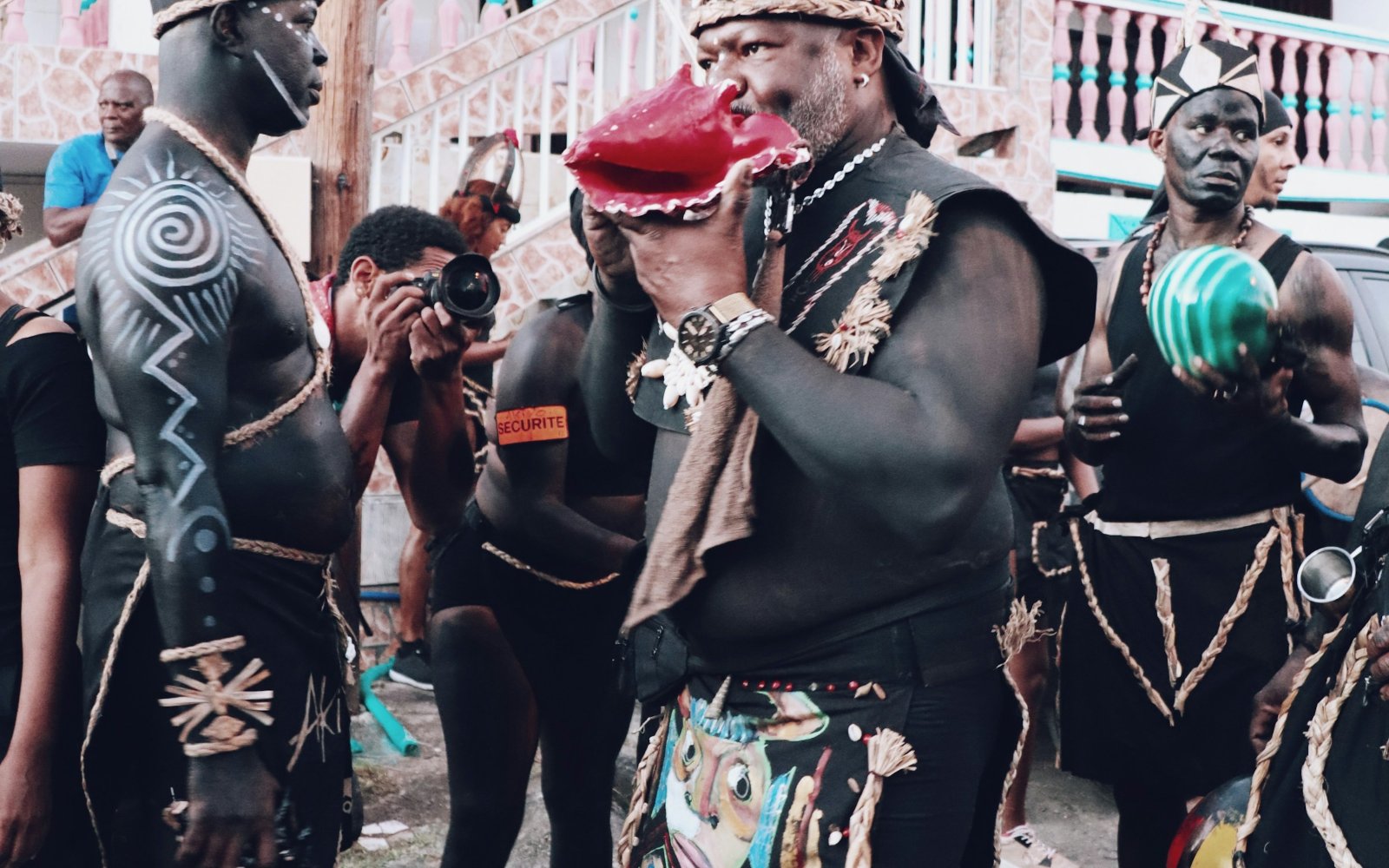
Gwoka is the centre of Guadeloupean cultural identity. It combines responsorial singing in Creole, rhythms played on the ka drums and dance, and it grew from the practices of enslaved Africans in the seventeenth and eighteenth centuries. It became a strong symbol of identity in the 1970s, and UNESCO placed it on its Representative List of the Intangible Cultural Heritage of Humanity in 2014. It is taught in schools, and its menndé rhythm underlies the percussion of Carnival.
Carnival and festivals
Carnival begins in early January and runs for about two months, ending on Ash Wednesday when the carnival king, Vaval, is burned. A country guide says Guadeloupe's Carnival has a character of its own. The Crab Festival at Morne-à-l'Eau marks Easter weekend, and every commune has village festivals. Zouk, which began in the folk music of Guadeloupe and Martinique, is described by one guide as the island's largest cultural export, a claim for which no export data was found.
Food and rum
Creole cooking mixes Caribbean, European, Indian and African influences, with an emphasis on fish and the fruit and vegetables at the day and night markets. The staples are accras of cod, bokits, colombo and fish blaff. Each island has its own: bébélé from Marie-Galante, and fish crêpes and tourment d'amour from Les Saintes. The island's distilleries include Damoiseau, Bologne, Bielle and Père Labat.
The land
Guadeloupe National Park, created in 1989, covers the rainforest and the volcano of Basse-Terre, and the wider archipelago has been a UNESCO Biosphere Reserve since 1992, according to a country guide. The Mémorial ACTe in Pointe-à-Pitre and the checkerboard tombs of Morne-à-l'Eau are among the heritage sites. A travel writer puts the outer islands 25 to 45 minutes apart by ferry.
Hurricanes and storms
Guadeloupe sits in the Atlantic hurricane belt, and its record is a reason to look at construction and insurance. Hurricane Hugo crossed Grande-Terre on 16 and 17 September 1989 as a Category 4 storm and killed 11 people. French sources disagree on the damage: over 25,000 homeless and 30,000 homes damaged in one account, over 50,000 homeless in another, and costs of over €600 million or €1.2 billion in updated terms. Maria passed just south of Basse-Terre on 19 September 2017 as a major hurricane, Category 4 or 5 depending on the source, after devastating Dominica. In September 2022, Tropical Storm Fiona crossed the island, bringing flooding and one death, with 534 millimetres of rain at Saint-Claude. A storm does not have to be a hurricane to cause serious flooding.
What this means for a buyer
Life here suits someone comfortable with French administration and a Creole culture with its own music and calendar. Visit during Carnival and outside it, and ask any seller about flood and wind exposure. The cost and areas articles in this series cover prices and fees.
Related guides
More on Guadeloupe
Living in Guadeloupe Beyond 90 Days: The Visitor Visa and the Route to French Citizenship
What Buying and Living in Guadeloupe Costs: Notary Fees and Prices 16% Above Mainland France
Best Areas to Buy in Guadeloupe: Saint-François, Le Gosier, Deshaies and the Outer Islands
Similar guides for other islands
Explore related blogs
View All
Creole Month, the Real Mas and a Festival Calendar Shaped by Storms: Everyday Life in Dominica
Relocating & Moving Guide
Vaval, Bèlè and Rhum Agricole: Everyday Life in Martinique
Relocating & Moving Guide
Residency in Martinique: Which Rules Apply to You and What Happens After You Arrive
Relocating & Moving Guide
Living in Guadeloupe Beyond 90 Days: The Visitor Visa and the Route to French Citizenship
Relocating & Moving Guide
Looking for Properties?
Browse homes that match your needs and budget with expert support and personalized advice to help you find your perfect Caribbean property. Get started within 5 days for quality advice to begin searching.