Cou-Cou, Crop Over and a Storm Record Shorter Than You Think:
Everyday Life in Barbados
Cou-Cou, Crop Over and a Storm Record Shorter Than You Think: Everyday Life in Barbados
Barbados is a small, flat, densely settled island in the Atlantic, and daily life revolves around a few traditions that residents take seriously: a long festival season, one national dish and a political history that changed as recently as 2021.
The island in numbers
Barbados is the easternmost island in the Lesser Antilles, about 430 square kilometres in area, roughly 21 miles long and 14 miles wide. Unlike its volcanic neighbours to the west, it is mostly flat. The highest point, Mount Hillaby, rises to about 340 metres, near the Scotland District on the east side, and the island is divided into 11 parishes. The population is hard to pin down: a travel site quotes 261,692 for 2025, citing the Barbados Statistical Service, while a fun-facts site gives 285,984 for 2017, so check the current figure with the Service. The currency, the Barbados dollar, is pegged at two to the US dollar. English is the official language, spoken alongside Bajan, a creole, and Christianity is the main religion, with Anglicans the largest denomination, according to a local resort blog.
A republic since 2021
Barbados became independent from Britain on 30 November 1966, joined the UN a week later and joined CARICOM in 1973. On 30 November 2021, 55 years to the day after independence, it became a republic, with Dame Sandra Mason, formerly Governor-General, as the first president. It remains in the Commonwealth. Its parliament dates from 1639 according to a fun-facts site, and is described as one of the oldest in the Americas. Historic Bridgetown and its Garrison were added to the UNESCO World Heritage List in 2011.
The festival year
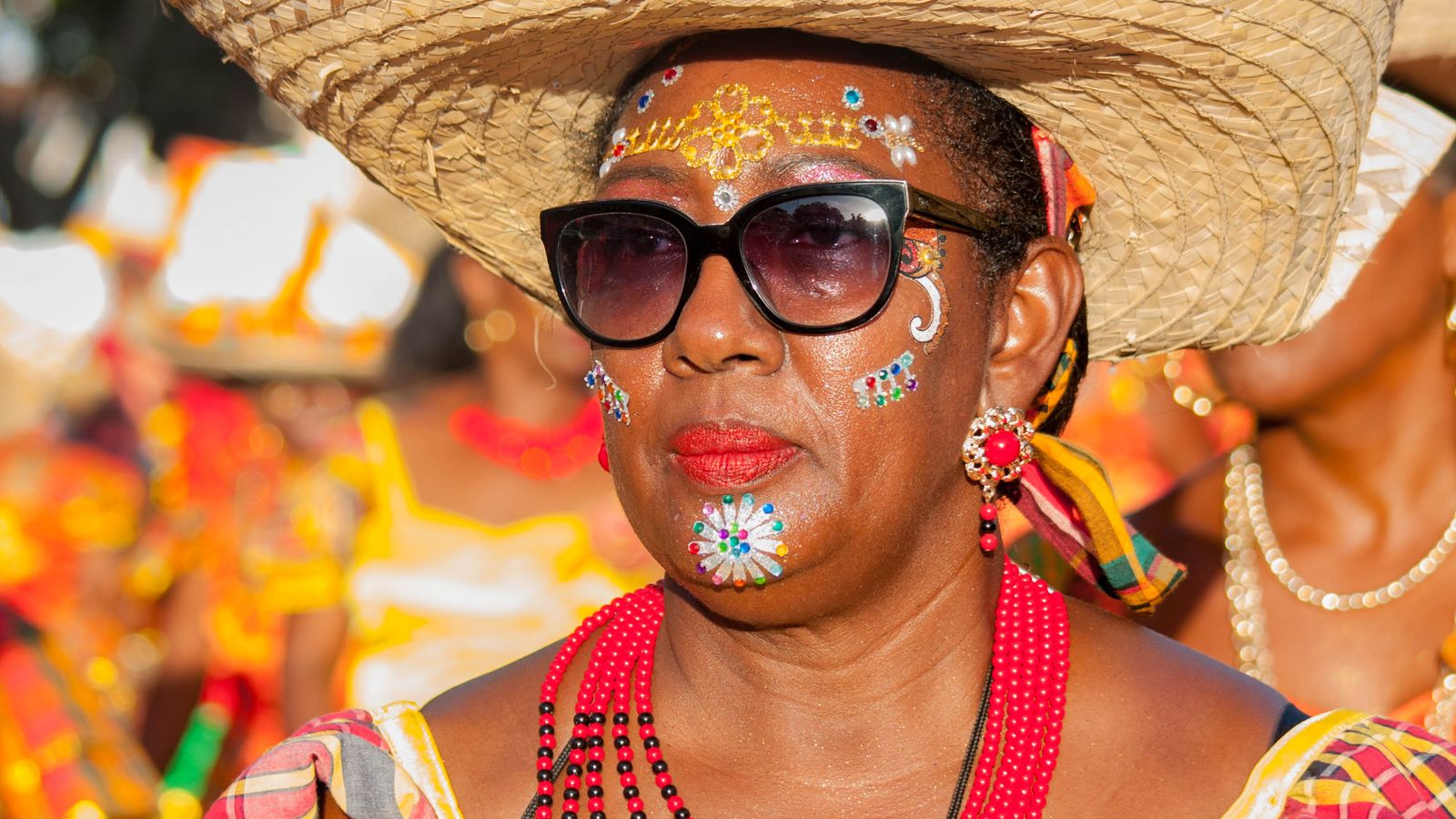
Crop Over is the island's biggest festival and marks the end of the sugarcane harvest, which once dominated the economy. Events begin in late May or early July, depending on the source, and run through the summer to Kadooment Day on the first Monday of August, a public holiday that fell on 3 August in 2026. A children's reference site says the modern festival dates from 1974, though harvest celebrations go back much further. Other fixtures include the Oistins Fish Festival at Easter, the Friday night fish fry at Oistins, National Heroes' Day on 28 April, and the National Independence Festival of Creative Arts in November.
Food and rum
The national dish is cou-cou and flying fish. Cou-cou is cornmeal and okra stirred to a firm, smooth consistency, a dish that reflects West African influence, and the flying fish is so closely associated with the island that Barbados is nicknamed the Land of the Flying Fish. A travel site says it appears on the one-dollar coin. Barbados calls itself the birthplace of rum, and Mount Gay says it is the world's oldest rum distillery, with more than 300 years of history, which is the company's own claim.
Climate, dust and storms
The wet season runs from June to November, and a local resort blog puts the average temperature at about 28 degrees Celsius. The same source says the island is often dusted by Saharan dust, carried across the Atlantic from West Africa.
The hurricane record is shorter than a popular claim suggests. A widely repeated line says the last hurricane to hit Barbados was Janet in 1955. Hurricane Elsa passed just south of the island on 2 July 2021, and one account says it damaged about 2,300 houses. Hurricane Beryl passed south of Barbados on 1 July 2024, at a distance that sources put between about 45 and 150 kilometres. The World Bank says it caused extensive damage to the Bridgetown Port, the cruise terminal and the Fisheries Marina, and damaged or destroyed 240 fishing vessels, and approved a recovery project in November 2024. Barbados sits at the southern edge of the usual storm tracks, but it is not immune.
What this means for a buyer
Life in Barbados suits people who like a settled, English-speaking, festival-driven society on a small island with good services. Time a visit for Crop Over and again for the quieter autumn. Insurance, wind exposure and the condition of the roof are legitimate questions, even on the south and west coasts. The cost, residency, areas, market and rental articles earlier in this series cover the property side.
Explore related blogs
View All
The World's Oldest Citizenship by Investment Programme: St Kitts and Nevis in 2026
Relocating & Moving Guide
What It Costs to Buy and Live in Grenada: The 10% Licence and a Wide Budget Range
Economic Insights
Residency for Dominican Republic Property Buyers: The US$200,000 Route and the Citizenship Timeline Problem
Relocating & Moving Guide
Looking for Properties?
Browse homes that match your needs and budget with expert support and personalized advice to help you find your perfect Caribbean property. Get started within 5 days for quality advice to begin searching.