Heavy Cake, Pirates Week and Ivan:
Everyday Life in the Cayman Islands
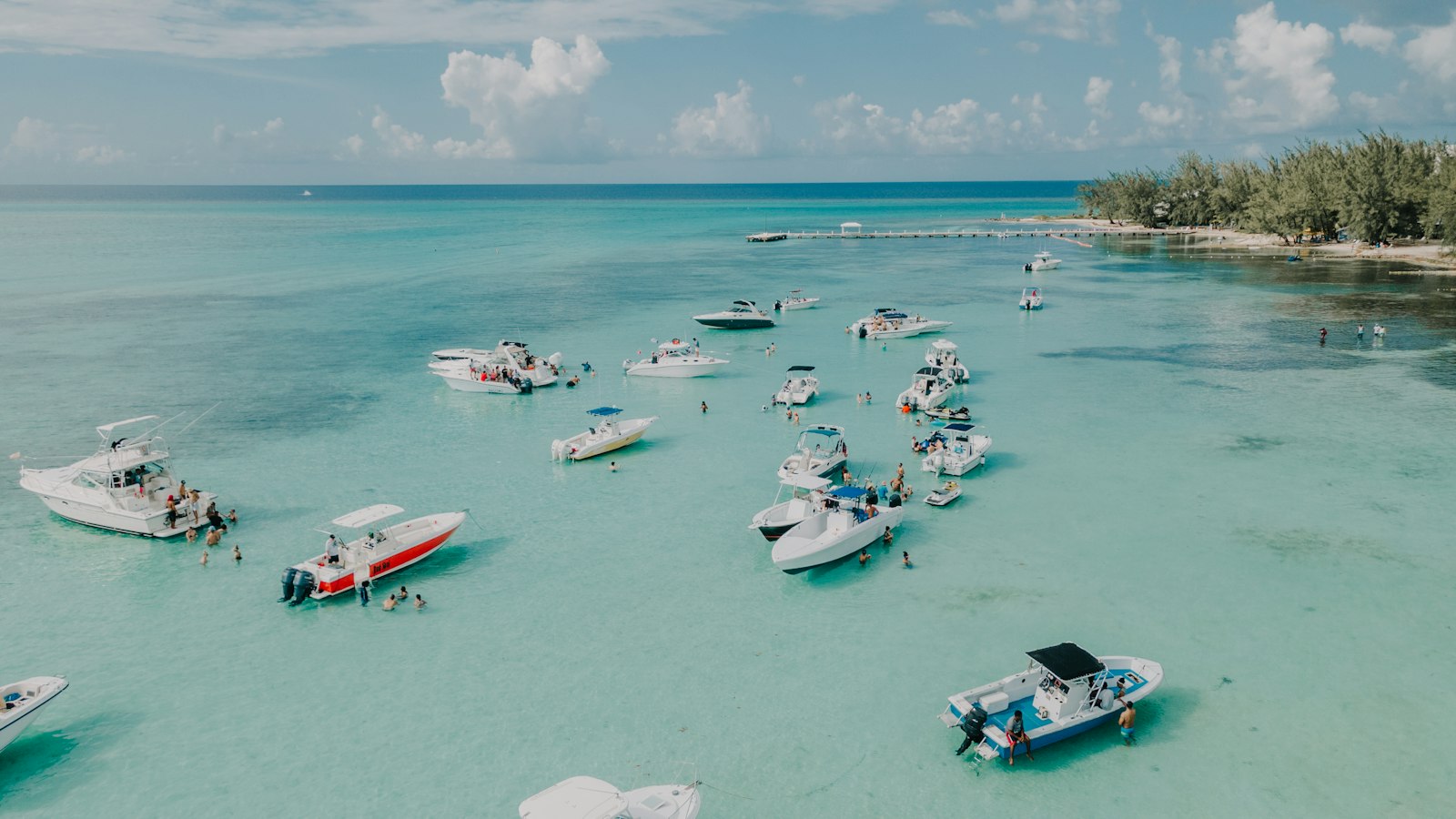
Heavy Cake, Pirates Week and Ivan: Everyday Life in the Cayman Islands
The Cayman Islands are best known for finance and diving. Day-to-day life is shaped by something less obvious: a small, mostly foreign-born population living on three islands that have little in common.
Three islands, very different
Grand Cayman holds almost everyone. The 2021 census counted 68,706 people across the territory, and a more recent overview puts the figure at about 84,700, which suggests rapid growth, though the two figures come from different sources. Little Cayman, the smallest island, had 161 residents in 2021, of whom 48, or 29.7%, were Caymanian. It is also the main refuge of the critically endangered Sister Islands rock iguana, whose nesting habitat the National Trust and the Department of Environment protect. Cayman Brac sits between them in size. A local magazine says about 52.5% of residents are non-Caymanian and 47.5% Caymanian, a split that explains why so many languages are heard in supermarkets and offices, though the article gives no year for it. Creole forms of English, sometimes called Bay Islands English, are thought to have developed in the eighteenth century and are more common on Cayman Brac and Little Cayman.
A short history of independence from Jamaica
British rule reached the islands through Jamaica in the seventeenth century. When Jamaica became independent in 1962, the Cayman Islands chose to remain a British dependency, and a Cayman dollar replaced the Jamaican dollar in 1972. The Department of Tourism's own guidance converts Cayman dollars to US dollars by dividing by 0.82, which implies a fixed rate of about CI$1 to US$1.22, so any price quoted in Cayman dollars should be converted before comparing it with other islands in this series.
Festivals
Pirates Week, held in November, is the national festival, with costumed parades, mock invasions, fireworks and district Heritage Days celebrating local food and traditions. Thatch weaving, once practical work for making ropes and hats, is celebrated as a heritage craft. Batabano, the costume carnival, takes place on Grand Cayman in late April or early May, and Cayman Brac holds its own, called Brachanal, about a week later, according to an older cultural reference whose dates may have moved. The islands' mascot is Sir Turtle, a peg-legged turtle that combines the three symbols of turtles, pirates and the British.
Food
Cayman cooking draws on the sea and on root crops. Heavy cake is a dense dessert made with cassava, and "breadkind" is the local word for starchy vegetables such as yam, plantain and cassava. Conch is served as fritters, stew or raw with lime juice, fish rundown is simmered in coconut milk, and turtle stew is a traditional dish that is now tightly regulated. Sunday lunch of stew, rice and peas, plantain and heavy cake is described as an institution.
Hurricane Ivan
Everyone who lived through Hurricane Ivan in 2004 has a story, and the storm still shapes how people build, insure and prepare. Ivan caused catastrophic damage, and the islands rebuilt quickly. Be wary of older reference books that claim no hurricane has struck since 1932, which is out of date. Hurricane season runs from mid-summer to November, as elsewhere in the region.
What this means for a buyer
Cayman offers a high-income, highly international society alongside a small local culture that is proud of its heritage. Spend time on the sister islands, which feel quite different from Grand Cayman, and attend a festival. The market, cost and residency articles earlier in this series cover the property side, and the insurance costs there reflect the storm risk described here.
Explore related blogs
View All
The World's Oldest Citizenship by Investment Programme: St Kitts and Nevis in 2026
Relocating & Moving Guide
Cou-Cou, Crop Over and a Storm Record Shorter Than You Think: Everyday Life in Barbados
Relocating & Moving Guide
Residency for Dominican Republic Property Buyers: The US$200,000 Route and the Citizenship Timeline Problem
Relocating & Moving Guide
Residency and Citizenship Options for Saint Lucia Property Buyers
Relocating & Moving Guide
Looking for Properties?
Browse homes that match your needs and budget with expert support and personalized advice to help you find your perfect Caribbean property. Get started within 5 days for quality advice to begin searching.