Renting Out Property in Aruba:
Licences and Taxes in 2026
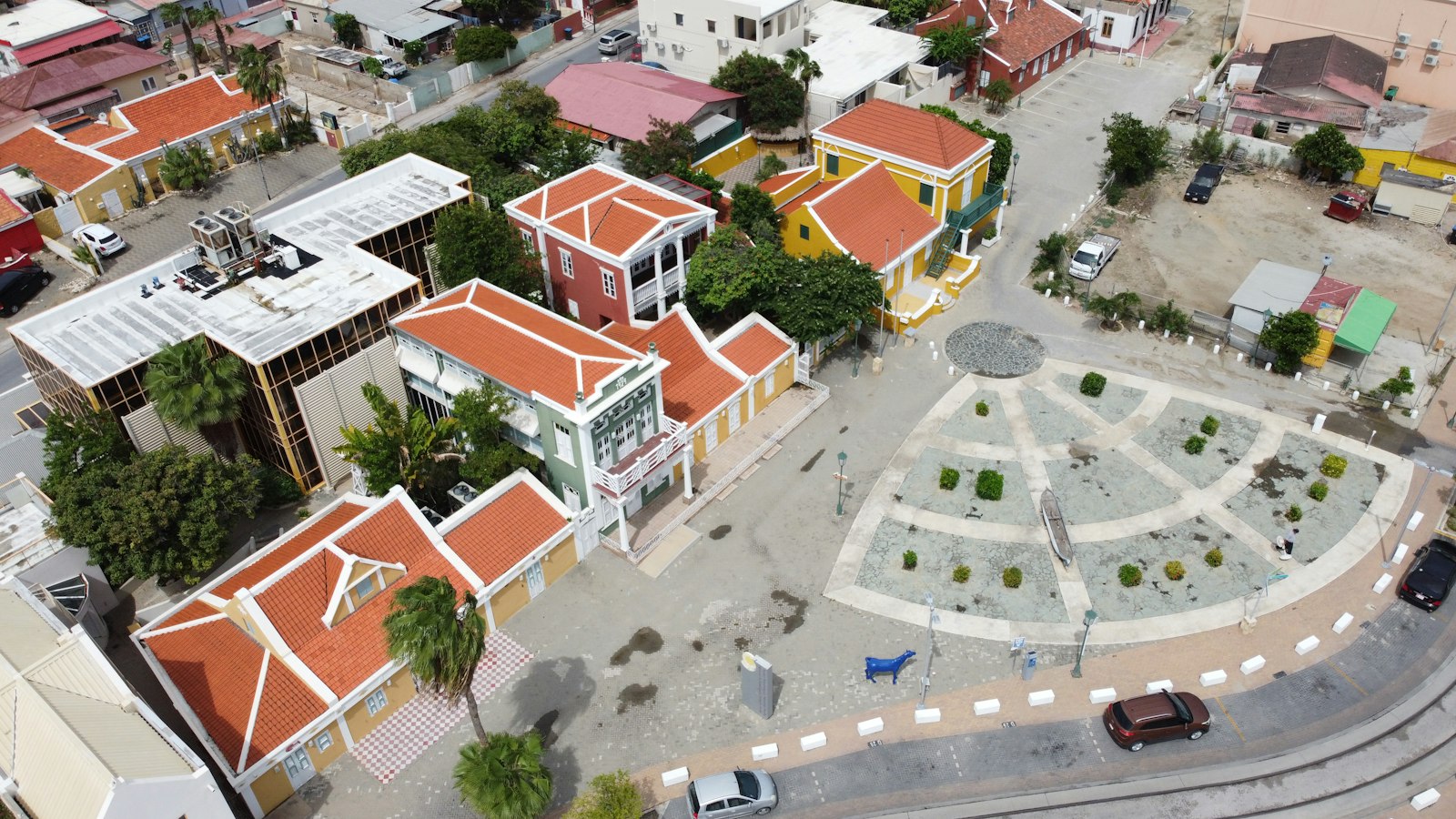
Renting Out Property in Aruba: Licences and Taxes in 2026
Owners renting out a holiday home in Aruba collect a 12.5% tourist levy and AWG 5.37 (US$3.00) a night in room tax, as at November 2026. Aruba, a constituent country of the Kingdom of the Netherlands, opened registration for existing holiday rentals on 1 November 2026. No law making that registration compulsory is yet in force, and an interim policy bars new rentals.
Key takeaways
Registration: existing holiday rentals can register free from 1 November 2026 to 31 January 2027, at vacationrentalregistry.com.
New rentals: an interim government policy bars new holiday rentals, extra units and expansions, as announced on 16 October 2026.
Tourist levy: 12.5% of what the guest pays for the room, owed by the person who lets it.
Room tax: AWG 5.37 (US$3.00) per occupied room per night, which the law applies to houses and flats let privately to tourists.
Land tax: non-residents pay 0.6% a year, and a let home can be valued on its rent.
Legal framework
Aruba has been an autonomous constituent country of the Kingdom of the Netherlands since 1986, with its own parliament, prime minister and courts; foreign policy and defence are Kingdom matters. It is outside the European Union and the Schengen Area, and its currency, the Aruban florin, is pegged at AWG 1.79 to the US dollar. In practice, Aruba's own ordinances set the rental rules and taxes, not Dutch or EU law, and they differ from those of Curaçao and St Maarten.
Key facts
Legal framework: autonomous country within the Kingdom of the Netherlands since 1986; currency the Aruban florin, AWG 1.79 to US$1 (Verified)
Registration window: 1 November 2026 to 31 January 2027, free, at vacationrentalregistry.com (Corroborated)
Is registration compulsory: the government says existing rentals must register; the registry and press say it is voluntary with no fine (Disputed)
Registration and permits: registering does not grant a permit or legalise a property (Verified)
Interim policy: no new holiday rentals, extra units or expansions while the policy is drafted (Verified)
Tourist levy: 12.5% of the room price paid by the guest, owed by the operator (Verified)
Room tax: AWG 5.37 (US$3.00) per occupied room per night, Aruban residents exempt (Verified)
Sustainability fee: US$20 per visitor arriving by air since 1 July 2024, paid by the visitor (Verified)
Land tax, non-residents: 0.6% of the taxable value a year. Note: the official text read is consolidated to December 2018 (Verified (see note))
Rental income: non-residents pay Aruban income tax on income from property in Aruba (Corroborated)
Can you rent out a holiday home in Aruba in 2026?
Yes for an existing rental, but not for a new one while the interim policy stands. On 16 October 2026 the Government of Aruba said every property already used as a holiday rental must register, including those that already hold permits. It also said registering does not grant a permit, legalise the property or give a right to expand, and that the interim policy bars new rentals, extra units and expansions. The current zoning plan (ROPV) caps holiday rentals at 100 units in total across Downtown Oranjestad and San Nicolas. A task force of the finance and economic affairs, infrastructure, public health and tourism ministries runs the programme. The government says the interim policy is still being drafted and will be legally reviewed. A buyer planning to let a home that is not yet a rental should ask a local lawyer whether it can be registered at all.
How registration works, and whether it is compulsory
Registration opened at noon on 1 November 2026 and closes on 31 January 2027, through vacationrentalregistry.com, and it is free. The sources disagree on whether it is required. The government's announcement says existing rentals must register. A 24ora report of 31 October 2026 says the first round is voluntary and owners will not be fined for not taking part, while legislation for a compulsory system is being prepared for the Council of Advice. Glas & Glas, an Aruban law firm, notes the same difference and adds that unregistered rentals fall outside the tolerance arrangement and cannot later be legalised. In April 2024 the government had already said a registration law was in its final phase, with licensing and hygiene and safety inspections planned; no evidence was found that it was enacted. Separately, the Aruba Chamber of Commerce says rooms let to guests need an accommodation licence (logementvergunning) for 9 rooms or fewer, but its page does not say whether one owner letting one home needs one.
Which taxes apply to holiday rental income in Aruba
Three charges apply to guests' stays and one to the owner's income. The tourist levy is 12.5% of what the guest pays for the room, not counting the levy itself, under the Landsverordening toeristenheffing (consolidated January 2023). The operator owes it, or the platform or agent if the guest pays them, and it may be charged on to the guest. A non-resident operator may appoint a tax representative in Aruba. Glas & Glas says the rate rose from 9.5% in 2023. A second ordinance adds AWG 5.37 (US$3.00) per occupied room per night, and expressly treats a house or flat let to tourists, commercially or privately, as a lodging. Visitors arriving by air also pay a US$20 sustainability fee themselves, through the ED card. On income, Deloitte's 2026 guide says non-residents pay Aruban income tax on Aruba-source income, including from property, at 0% up to AWG 34,930, 21% to AWG 63,904, 42% to AWG 135,527 and 52% above. Turnover taxes total 7% according to Deloitte; Glas & Glas says they apply to extras such as cleaning or transport and to longer stays outside the levy. No official guidance on how net rental income is calculated was found.
Land tax on a rented home in Aruba
Non-residents and companies pay land tax (grondbelasting) at 0.6% a year, according to the Landsverordening grondbelasting as consolidated in December 2018 and Deloitte's 2026 guide. Resident individuals pay lower, banded rates. Letting can change the value the tax is based on: the law uses market value for an owner's main home, but for other property it uses the annual rent multiplied by 12.5 (buildings from before 1 March 1977) or by 8 1/3 (later buildings), or the market value if that is higher. The text read is from 2018 and may have been amended. Ask the Departamento di Impuesto (DIMP) or a tax adviser how a let home will be valued before relying on a figure.
Long-term lets in Aruba
Long-term letting is an alternative where the holiday rental rules do not fit. Since 1 September 2021, Aruba's lease law sits in the Civil Code, according to HBN Law & Tax. The firm says the Lease Commission (Huurcommissie) can set a maximum rent only for homes worth AWG 150,000 or less, and not for existing leases. It can also issue an enforceable order to vacate, though an appeal by the tenant delays eviction. No source said foreign owners are barred from letting long term, and none confirmed it either. The tourist levy and room tax are charges on tourist stays, so they are not described as applying to a resident tenant's lease.
How big Aruba's holiday rental market is
The Aruba Tourism Authority (ATA) estimated about 5,500 to 6,000 short-term rental units, with occupancy of about 55% to 60%, in an item published by the government in August 2025. It also estimated AWG 60 million to AWG 70 million a year in tourist levy lost on them. Aruba had 1,515,102 stay-over visitors in 2025, 6.6% more than in 2024, according to the ATA. From January to May 2026, accommodation other than hotels and timeshares, which includes holiday rentals, took 41.6% of visitor nights. By comparison, holiday lets in the Cayman Islands and the Turks and Caicos Islands already need a licence, as the guides to those islands explain.
Worked example: levies on a holiday rental let for 150 nights
Assume a one-bedroom condo let for 150 nights a year at US$250 a night, so the guests pay US$37,500 for the room (AWG 67,125 at 1.79).
Tourist levy: 12.5% × AWG 67,125 = AWG 8,390.63 (US$4,687.50)
Room tax: AWG 5.37 × 150 nights = AWG 805.50 (US$450.00)
Total levies to collect and pay over: AWG 9,196.13 (US$5,137.50)
The US$20 sustainability fee is paid by each guest on arrival, not by the owner.
This is our calculation from the figures above, not a published total. It leaves out income tax, turnover tax on extras, land tax, management fees and any condo association rules, which depend on the owner's circumstances.
Where sources disagree
Is registration compulsory: the Government of Aruba (16 October 2026) says all existing holiday rentals must register; 24ora (31 October 2026) and the registry say the first round is voluntary with no fine. Ask an Aruban lawyer whether a property should register before 31 January 2027.
Share of visitors in holiday rentals: the government said about 30% in April 2024 and the ATA said 33% for 2024; Glas & Glas, citing the Centrale Bank van Aruba, gives 39.1% of nights in 2025. These measure visitors and nights, so they are not directly comparable.
Who this suits, and who it does not
This guide suits an owner of an existing Aruba condo or villa that is already let to holidaymakers, who needs to know the registration deadline and the levies to collect.
It suits less well a buyer who plans to start a new holiday rental. The interim policy bars new rentals, so that buyer needs written advice from an Aruban lawyer before buying on the strength of rental income.
Questions and answers
Do I need to register my Aruba vacation rental?
The Government of Aruba says existing holiday rentals must register, and registration runs from 1 November 2026 to 31 January 2027. The registry calls this first round voluntary with no fine, so confirm with a local lawyer.
Can I start a new Airbnb in Aruba in 2026?
Not while the interim policy stands. The government said on 16 October 2026 that it bars new holiday rentals, extra units and expansions.
What is the tourist tax on vacation rentals in Aruba?
The tourist levy is 12.5% of the room price the guest pays. A room tax of AWG 5.37 (US$3.00) per occupied room per night is added.
Do non-residents pay tax on Aruba rental income?
Yes. Deloitte's 2026 guide says non-residents pay Aruban income tax on income from property in Aruba, at rates from 0% to 52%.
Is there a limit on vacation rentals in Aruba?
Yes. The current zoning plan caps holiday rentals at 100 units in total across Downtown Oranjestad and San Nicolas, and the interim policy bars new ones everywhere.
Related guides
More on Aruba
Similar guides for other islands
Renting Out Your Cayman Property: The Tourism Licence, the 13% Tax and the Policy Risk
Renting Out Your Turks and Caicos Property: Licences, the 12% Tax and Tighter Enforcement
Renting Out Property in Jamaica: Licences, Room Tax and the 2027 GCT Change
About the data
Figures are the latest available as of November 2026. Next review due January 2027, when the registration window closes.
This guide draws on 13 sources: 8 official or institutional, 2 law firm, 1 adviser, 1 business body, 1 press.
0 Key facts are Estimates and 1 is Disputed; the income tax bands, turnover tax, rental unit estimate and long-term let rules in the text rest on single sources. See Where sources disagree.
No rental prices or yields are quoted. No reliable official data on Aruba rental yields was found.
Fact statuses: Verified means stated by a primary or official source (Verified (see note) adds a caveat). Corroborated means several independent sources agree, but no primary source was found. Estimate means a single source, an agency figure or an asking price. Disputed means sources conflict. Calculated by Pan Caribbean means our own arithmetic from the figures shown.
Sources and checks
Researched November 2026. Next review due January 2027.
Government of Aruba: government clarifies management rules for vacation rentals, 16 October 2026 (official or institutional)
Government of Aruba: vacation rental policy is in its final phase, 29 April 2024 (official or institutional)
Government of Aruba: ATA on hotels and short-term vacation rentals, 21 August 2025 (official or institutional)
Landsverordening toeristenheffing, AB 1989 no. GT 40, consolidated 13 January 2023 (official or institutional)
Landsverordening bijzondere belasting verblijf in timeshareresorts, logementen en hotels, AB 2013 no. 43, consolidated 12 January 2023 (official or institutional)
Departamento di Impuesto: Landsverordening grondbelasting, AB 1995 no. GT 3, consolidated 27 December 2018 (official or institutional)
Aruba Tourism Authority: sustainability fee, updated 10 July 2024 (official or institutional)
Aruba Tourism Authority: Monthly Report, May 2026 (official or institutional)
Aruba Chamber of Commerce: permits (business body)
HBN Law & Tax: recent changes to Aruba lease law, 15 September 2021 (law firm)
Deloitte: Aruba Highlights 2026 (adviser)
24ora: short-term vacation rental registration opens November 1, 31 October 2026 (press)
About Pan Caribbean
Pan Caribbean is a Caribbean property marketplace covering 23 markets: 11 independent nations and 12 overseas territories. It gives buyers clear, sourced information on each market, including prices, residency, buying costs and daily life, and offers information and consultancy services on the market to developers and investors.
This guide gives general information, not legal, tax or financial advice. Pan Caribbean is not an estate agent or broker and does not act in any sale or purchase. Confirm the details with an independent licensed professional before acting.
Explore related blogs
View All
Renting Out Your Turks and Caicos Property: Licences, the 12% Tax and Tighter Enforcement
Renting Out Your Property
Renting Out Your Bahamas Property: Registration, VAT and the New Property Tax Class
Renting Out Your Property
Renting Out Your Cayman Property: The Tourism Licence, the 13% Tax and the Policy Risk
Renting Out Your Property

Renting Out a St Barts Villa: The High-Season Economics
Renting Out Your Property
Looking for Properties?
Browse homes that match your needs and budget with expert support and personalized advice to help you find your perfect Caribbean property. Get started within 5 days for quality advice to begin searching.