Buying Property in St Barts:
The Complete Guide for International Buyers
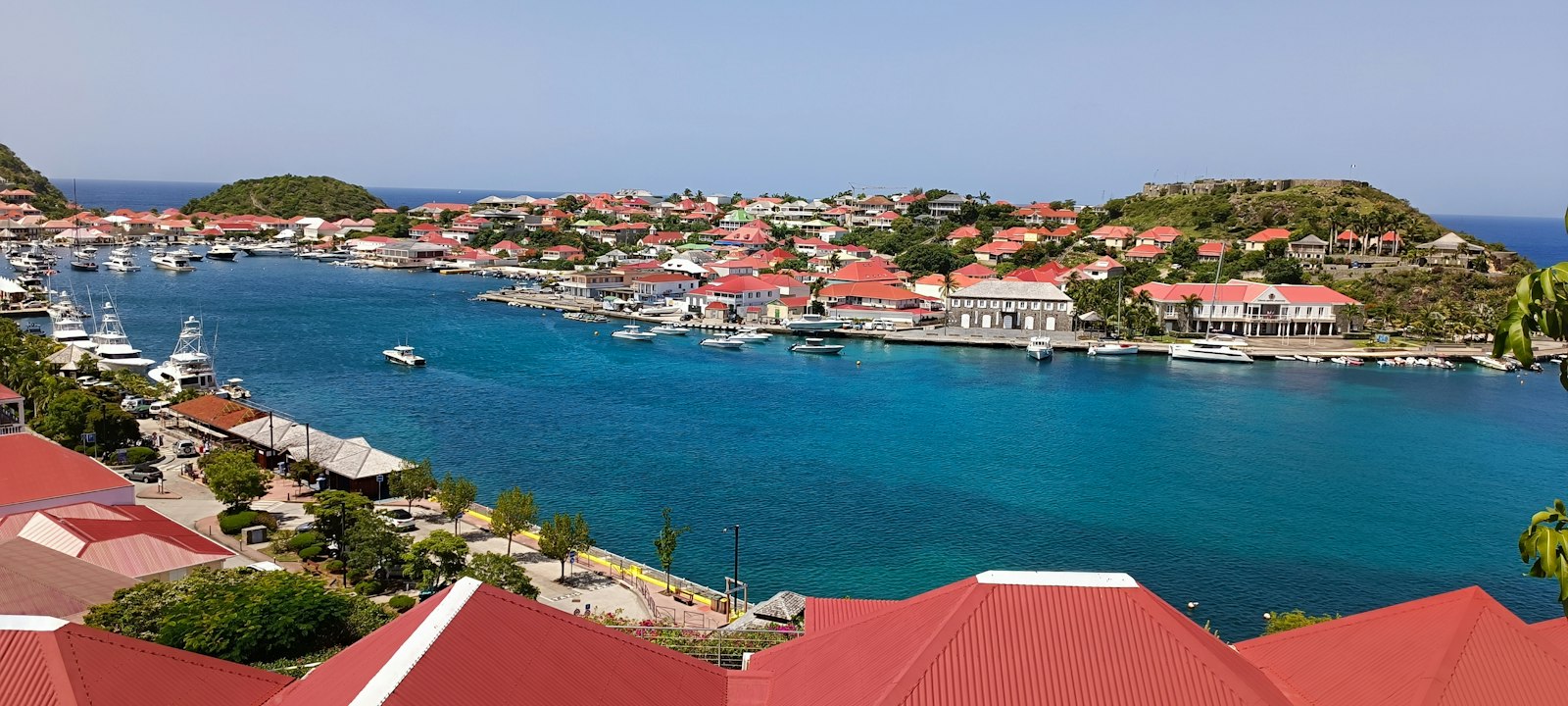
Buying Property in St Barts: The Complete Guide for International Buyers
St Barts covers just 21 square kilometres of dry, hilly volcanic rock. It has around 10,700 residents and one of the most expensive property markets anywhere in the world. Transaction data compiled by SiBarth Real Estate shows somewhere between 70 and 113 villa and land sales a year since 2021. That is a tiny market, and small markets are easy to misread.
Good information is also hard to come by. In November 2025 the head of SiBarth Real Estate, one of the island's longest-established agencies, publicly challenged figures that had been circulating in the French press. Those reports claimed the average sale was between €12 million and €20 million. His agency's own records put the 2024 average closer to €6 million.
This guide is for international buyers, mainly from the US, the UK and Europe, who want a straight answer before they start viewing villas. It covers the island's legal status, prices, neighbourhoods, building rules, the purchase process, the taxes written into the island's own tax code, renting, financing and selling.
Two points to bear in mind as you read. St Barts writes its own tax and planning rules, so advice that holds in Paris or Provence often does not hold here. And rules change: every figure below was checked against official or primary sources in October 2026, but a local notaire should confirm the position for your purchase before you sign anything.
The legal status of St Barts, and why it matters to buyers
St Barts (officially Saint-Barthélemy, and also written St Barth or St Barths) is part of France, but it is not governed like mainland France. Until 2007 it was a commune attached to Guadeloupe, 230 km to the south-east. An organic law of 21 February 2007 turned it into an overseas collectivity (collectivité d'outre-mer) under Article 74 of the French Constitution. The new Collectivité formally came into being on 15 July 2007, when its Territorial Council met for the first time.
That status hands the island its own powers over tax, planning, construction, housing, energy and the environment. The Collectivité has its own tax code, the Code des contributions, which replaced the French national tax code on 1 January 2008. It also has its own planning code, and it issues building permits itself.
On 1 January 2012 the island changed its relationship with the European Union as well. It stopped being an "outermost region" of the EU and became an Overseas Country and Territory associated with the EU. St Barts is therefore outside EU territory and runs its own customs regime, but it kept the euro, and islanders remain French and EU citizens.
For a buyer, this produces a hybrid that is worth understanding properly:
French civil law still governs property. Contracts, title, mortgages and the role of the notaire all work as they do in France, which gives buyers a mature and well-tested legal framework.
Tax is local. Purchase duty, capital gains tax and the tax on holiday lettings are set by the Collectivité, not by Paris, and the rates differ from the mainland.
Planning is local and tight. The Collectivité decides what can be built and where, and it has a statutory right to step in and buy property itself in certain sales.
Everything is priced in euros. Buyers holding dollars or sterling carry currency risk from the day they agree a price.
Can foreigners buy property in St Barts?
Yes, and on the same footing as French citizens. There is no landholding licence, government approval or quota for foreign buyers. That sets St Barts apart from several of its neighbours: St Vincent and the Grenadines, St Lucia and the British Virgin Islands all require non-nationals to obtain a licence before they can hold land.
The buyer pool reflects this openness. According to SiBarth Real Estate, roughly 55% of transactions involve clients from the EU and the UK, about 35% involve Americans, and the remaining 10% come from elsewhere.
There are three things that buying does not give you, and it helps to know them early:
A right to live or work on the island. Entry and residence are still controlled by the French state. Owning a villa does not change your immigration status.
St Barts tax residency. You only become tax resident after five years of living on the island (see the tax section below).
An unconditional right to complete. The Collectivité holds a statutory right of pre-emption over certain property transfers. It does use this right (the Collectivité spent more than €20 million on land acquisitions in 2025), and the declaration process adds time to the calendar, as explained in the buying process section.
The St Barts property market: what things really cost
The average villa in St Barts sold for about €6 million in 2024, according to SiBarth Real Estate's transaction records. There is no official public price index broken down by neighbourhood, so the most reliable figures come from that agency data, the annual economic report of the IEDOM (the French overseas central banking institute), and actual listings.
Average villa sale price, 2024: about €6 million (SiBarth Real Estate, via Le Journal de Saint-Barth)
Average house price per m², 2024: about €14,300 (IEDOM annual report 2024)
Typical Gustavia transactions: €20,000 to €30,000 per m² (SiBarth Real Estate)
Exceptional Gustavia sales: above €60,000 per m² (local agents, via Le Journal de Saint-Barth)
Average land price, 2024: about €1,990 per m² (SiBarth Real Estate)
Villa sales above €25 million, 2025: four (SiBarth Real Estate)
Annual sales volumes show how small the market is. The SiBarth figures cover villas and land, including purchases made by the Collectivité, but not apartments.
2024: 83 villa and land transactions
2023: 70
2022: 95
2021: 113 (a record year, worth more than €500 million in total)
With so few sales, one exceptional deal can drag an annual average up or down. Treat any single "price per square metre" for the island with suspicion.
What your budget buys
Current listings give a more practical picture than averages. At the time of writing, examples on the market include a four-bedroom villa of about 170 m² with sea views in Flamands at €3.99 million, a three-bedroom villa in Toiny at €4.8 million, and a four-bedroom villa in Pointe Milou at €9.8 million. Asking prices are not sale prices, but they show the range.
Roughly speaking:
Under €3 million buys an apartment, a small villa or a property in need of work. Supply is very thin.
€3 million to €10 million is where most three- and four-bedroom villas sit, with location, view and condition driving the spread.
€10 million to €30 million covers larger villas with exceptional views, beach access or significant land.
Above €30 million is a handful of trophy estates.
On that last point, be wary of the claim that "almost everything sells off-market". SiBarth Real Estate disputed a figure of 99% circulating in 2025 and said 70% of its own transactions were public sales. Discreet listings do exist, so a well-connected agent still matters.
Why prices stay high
Supply is capped by geography and by planning. Around 70% of the island is classed as green zone, protected wholly or partly from development. Demand, meanwhile, keeps growing: the island welcomed 333,052 visitors in 2025, a record and a rise of 6.5% on 2024, according to the IEDOM. Strong rental demand gives owners a way to offset running costs, which supports prices further. None of this guarantees future growth on any individual property, and volumes did fall from the 2021 peak, but it explains why values sit where they do.
Where to buy: a neighbourhood guide to St Barts
On an island this size, the micro-location matters more than the district name. Two villas in the same area can differ in value by millions because of the view, the orientation, the slope, the access road and whether the sea view is protected. Still, each part of St Barts has its own character, and most buyers narrow their search by lifestyle first.
Gustavia. The capital and harbour, and the only place on the island that feels like a town. Shops, restaurants, the port and the yacht scene are all on foot. Property here means apartments, townhouses and villas on the surrounding hills overlooking the harbour. It is also where the island's highest prices per square metre are recorded.
Saint-Jean. The busiest and most recognisable area, wrapped around Saint-Jean Bay next to the airport. It has the famous beach, the Eden Rock hotel, boutiques and restaurants. Buyers who want to be in the middle of things look here, though aircraft noise is worth checking on specific plots.
Flamands. A long, wide beach on the north-west coast, with a calmer residential feel. Beachfront and near-beach villas here are some of the most sought after on the island.
Colombier. The far north-west of the island, high and quiet, with big panoramic views. Colombier beach itself can only be reached by boat or on foot along a coastal path, which keeps it unspoilt.
Corossol. A small traditional village on the west coast between Gustavia and Flamands, with a more local atmosphere and fewer large estates.
Lorient. On the north coast east of Saint-Jean, one of the island's oldest settled areas. The beach is popular with families and surfers, and the neighbourhood has a relaxed, lived-in feel.
Pointe Milou. A rocky headland of hillside and clifftop villas east of Lorient. Buyers come for open ocean views, privacy and sunsets rather than beach access.
Marigot and Grand Cul-de-Sac. The north-east. Grand Cul-de-Sac has a shallow lagoon sheltered by a reef, good for families and water sports, with several hotels and villas around it. Marigot is quieter, with a small bay.
Vitet. The green hills of the north-east interior, home to Morne Vitet, the island's highest point at 286 metres. It suits buyers who want seclusion and elevation.
Petit Cul-de-Sac, Toiny and Grand Fond. The wild eastern and south-eastern coast, facing the Atlantic trade winds. Dramatic and private, with fewer swimming beaches but some exceptional estates.
Lurin and Gouverneur. The hills south of Gustavia, close to town but feeling far from it. Lurin offers views over the south coast, and Gouverneur leads down to one of the island's undeveloped beaches.
Saline. The south coast, best known for its undeveloped beach and salt ponds. Planning here has been contested in the past, so check the zoning of any plot carefully.
Anse des Cayes. A small bay on the north coast just west of Saint-Jean, popular with surfers and close to the island's busiest area.
St Barts land for sale and the building rules
Owning land in St Barts does not mean you can build on it. Whether a plot is buildable, and how much you can build, is set by the island's zoning map (the carte d'urbanisme) and its own planning code. Check this before you think about price.
How the zoning map works
The first zoning map was approved in February 2017. It replaced the national French planning rules that had applied until then, and it split the whole island into two types of zone: urban zones, which are buildable to different degrees, and natural zones, which are essentially off limits. Natural zones cover most of the coastline, most of the hills and their slopes, and the offshore islets.
A revised map was approved on 7 December 2020 and came into force on 1 January 2021. According to the Collectivité and local press coverage, the revision:
lowered permitted building heights;
gave more weight to landscapes, roadsides, viewpoints and terrain;
reduced building rights near beaches;
opened some new building rights, in around fifteen sectors.
The overall direction was to reduce building rights and limit sprawl. Planning remains a live subject on the island, so ask your notaire whether anything has changed since.
What land costs
SiBarth Real Estate puts the average land price in 2024 at about €1,990 per m². That figure moves around a lot from year to year: about €1,000 in 2017, €1,400 in 2018, €2,100 in 2019 and close to €3,000 in 2022. Other local agents quoted by Le Journal de Saint-Barth put the current average between €2,000 and €3,000. A plot with a valid permit, a good view and easy access will sit well above any average.
Checks before buying a plot (or a villa you plan to change)
Zoning and density. Confirm which zone the plot is in and how much floor area it allows. Where a plot straddles an urban and a natural zone, only the part in the urban zone counts towards building rights.
Existing permits. For a villa, check that every building, pool, extension and outbuilding was properly authorised. Do not assume an existing villa can be extended.
Access, slope and services. Steep plots and narrow access roads add cost and can limit what is approved.
Coastal rules. Seafront properties can be subject to a pedestrian easement along the shore, and the public maritime domain is not part of your title.
Design. The planning code allows projects to be refused if they harm the character of the area, the landscape or local heritage. Traditional, low-impact architecture tends to fare best.
Building permits are issued by the Collectivité's Executive Council. Budget for the development tax (taxe d'aménagement), which is charged at 5% on works that need a permit and can rise to 20% in some sectors. Every imported building material also carries the island's 5% dock duty (droit de quai), which is one reason construction costs here are so high.
Buying property in St Barts, step by step
The purchase follows the French model, with a notaire at the centre of it, and usually takes two to three months from signing the preliminary contract to completion. The steps below are the typical sequence; your notaire will tailor it to the property and to how you are buying.
Put your team together first. You will need an estate agent (agents on the island hold professional cards issued locally by the Chambre Économique Multiprofessionnelle), a notaire, and tax advice covering both St Barts and your home country. For older villas, add an architect or building surveyor. The notaire is a public officer who acts for the transaction as a whole; some buyers also appoint their own lawyer.
Agree the price. Offers are negotiated through the agent. Once agreed, the notaire starts gathering documents.
Sign the preliminary contract. This is either a compromis de vente (both sides commit) or a promesse de vente (the seller commits, the buyer holds an option). It sets the price, describes the property and lists the conditions precedent, such as obtaining a mortgage. A deposit, commonly 5% to 10% of the price in French practice, is usually held by the notaire.
Check the cooling-off position. In mainland France, private buyers of residential property have a 10-day cooling-off period after signing. St Barts writes its own housing and construction rules, so ask your notaire to confirm in writing what applies to your contract.
Allow for the pre-emption declaration. For transfers covered by the Collectivité's right of pre-emption, a prior declaration stating the price and terms must be filed. If the Collectivité does not respond within two months of receiving it, it is treated as having waived the right. Build those two months into your timetable.
Due diligence. The notaire checks title, mortgages and charges, easements and the planning position. This is the moment to confirm that the pool, extensions and outbuildings were all authorised, and, if you plan to rent, what registration is required.
Arrange funds. Expect detailed questions about the source of your money. If you are borrowing, the lender's offer must arrive within the deadline set in the contract.
Complete. Ownership passes when the final deed (acte authentique) is signed before the notaire. If you cannot travel, this can be done under a power of attorney prepared in advance with the notaire.
Registration and duties. The notaire collects the purchase duties and registers the sale. You receive a certified copy of the deed once formalities are complete.
Purchase costs: what to budget on top of the price
Expect total purchase costs of roughly 6% to 7% of the price. The largest single item is the island's own registration duty of 5%, set by Article 56 of the Code des contributions and paid to the Collectivité. The rest covers the notaire's fees, land registry formalities and a small State charge.
Registration duty (droit de mutation): 5% of the price, paid to the Collectivité de Saint-Barthélemy
Notaire's fees, registry formalities and State contribution: about 1% to 2% of the price, paid to the notaire and the State
Total typical buyer costs: about 6% to 7% of the price
Estate agency fee: set in the agency mandate, paid to the agent
On agency fees, check whether the advertised price includes them and who pays. Under French practice the fee can be charged to either the buyer or the seller, and the mandate says which.
A worked example. On a €6 million villa, the 5% registration duty comes to €300,000. With the notaire's fees and formalities on top, total costs would typically land somewhere between €360,000 and €420,000. Your notaire will give you an exact figure before you commit, because the structure of the purchase can change the calculation.
Two further costs catch buyers out:
Dock duty on everything you bring in. St Barts charges a 5% duty on goods imported by sea or air (8% on vehicles). Furniture, appliances, building materials and boats all attract it.
Renovation tax. If your plans need a building permit, the development tax of 5% (up to 20% in some sectors) applies to the works.
How to hold the property: in your own name, an SCI or a company
Decide on the ownership structure before you sign the preliminary contract, because changing it later usually means paying duties again. There is no single right answer. It depends on your nationality, where you are tax resident, who will inherit and whether you plan to rent.
In your own name. The simplest route, and often the cheapest to run. You own the property directly, alone or jointly. The main questions are inheritance (French civil law governs property on the island, so take advice on how it interacts with your own country's rules) and what happens if co-owners fall out.
Through an SCI (société civile immobilière). The standard French property-holding company, widely used for family ownership and succession planning. Shares can be passed on gradually, and several owners can hold a property cleanly.
Through a foreign company, LLC or trust. Possible, but this is where costly surprises live. Two rules in the Code des contributions matter most:
The 3% annual tax. Property held in St Barts by certain legal entities, trusts and similar arrangements can be charged an annual tax of 3% of its market value. There are exemptions, depending on where the entity is based and on making the required declarations, but on a €10 million villa a missed exemption costs €300,000 a year.
Selling the company is selling the property. Transfers of shares in companies that hold St Barts real estate are taxed and must be registered with a notaire or lawyer within one month. You cannot avoid duties or capital gains tax simply by selling the company instead of the villa.
For American buyers in particular, the US tax treatment of a French SCI or a foreign holding structure is a specialist question. Get advice from someone who handles both sides before you choose.
Ongoing taxes and running costs
St Barts has a reputation as a tax haven, and it is only partly deserved. Long-term residents pay no income tax, and owners do not receive the yearly property tax bills familiar from mainland France or the US. But buying a home here does not make you a local taxpayer, and running a villa is expensive.
The five-year residency rule
You become a St Barts tax resident only after living on the island for at least five years (or if you were already settled there before 15 July 2007). Until then, people who move to the island are generally treated as tax resident in France under French rules, which matters a great deal if you are relocating from the US, the UK or elsewhere. Owners who live elsewhere stay taxable in their home country, which will usually expect them to declare rent from the villa, subject to any tax treaty.
Once you qualify, the picture changes: St Barts levies no income tax on its residents, and France treats them as non-residents, taxing only their French-source income.
Taxes and charges on a St Barts home
Annual property tax: none of the mainland French type (taxe foncière or taxe d'habitation). Confirm for your property with your notaire.
3% tax on entities: 3% of market value each year, for property held by certain companies, trusts and similar arrangements. Exemptions depend on the entity and on annual declarations.
Waste collection tax: an annual charge on owners of housing. Rental villas are assessed per bedroom.
Electricity: regulated tariff of 12.74 cents per kWh (basic option, February 2026), plus a local electricity tax of 15%, or 30% on connections above 12 kVA. Air conditioning and pool heating are the biggest users.
Dock duty: 5% on imported goods, including furniture, supplies and replacement equipment.
Wealth tax: St Barts residents are not subject to France's property wealth tax (IFI) on island property. Others should take advice based on where they live.
Electricity deserves a note. Producing power on the island cost an estimated 41 cents per kWh in 2025, but customers pay the same regulated tariff as on the French mainland thanks to a national equalisation scheme. The local electricity tax sits on top.
Running costs to plan for
There are no reliable published averages, so get quotes for the specific villa. The usual lines are building and contents insurance with hurricane cover, property management, housekeeping and gardening, pool maintenance, security, utilities, and a sinking fund for the salt air, which is hard on everything from air conditioning units to window frames.
Renting out your St Barts villa
Many owners let their villa when they are not using it, and the demand is real. Tourist tax receipts reached €17.2 million in 2025, up 8.9% on the year, according to the IEDOM. But holiday letting comes with a registration requirement and a monthly reporting routine that owners sometimes underestimate.
Register before you advertise
Anyone offering a furnished holiday home (villa, apartment or studio) or guest rooms to short-stay guests must first file a declaration with the Collectivité. This is done online through the Collectivité's tourist tax platform. On receipt, the Collectivité issues a 13-digit registration number.
Online platforms are required to ask for this number before they list a St Barts property. The declaration records the owner, the address, the type of accommodation and the number of rooms and beds, and any change means filing a new declaration. Owners who fail to declare can be fined, and the fine can be imposed separately for each unregistered property.
The tourist tax
Guests pay a tourist tax (taxe de séjour) of 5% of the actual price charged for the nights, excluding extra services. The owner or the managing agent collects it from guests before they leave, records each stay on the Collectivité's platform, validates the monthly return before the 15th of the following month, and pays by the end of that month. If nobody stayed during a month, a nil return is still required.
Two groups are exempt: tenants on leases of more than six months, and seasonal workers employed on the island.
How to check a villa is properly registered
If you are buying a villa with a rental history, or renting one yourself, ask for its 13-digit registration number and check that it appears on the listings. For a purchase, ask the seller for evidence of tourist tax returns, which also gives you a useful view of the villa's real occupancy and income.
Income tax on rental profits
The tourist tax is not an income tax. Rental profit is taxed according to the owner's own tax position: St Barts tax residents pay no local income tax on it, while owners resident elsewhere will usually need to declare it at home.
Hurricane season and the rental calendar
The main letting season runs through the northern winter and spring. Demand drops sharply during the Atlantic hurricane season (1 June to 30 November), and many businesses on the island close for part of the late summer and autumn. Rental projections should reflect a strong winter, not twelve full months.
Financing a purchase in St Barts
Mortgages are available in St Barts, but there is no published breakdown of how many purchases are financed and how many are paid in cash. What the IEDOM data does show is an active local lending market: bank lending on the island reached €1.2 billion at the end of 2025, and housing loans grew by 5.2% during the year.
In practice, international buyers tend to look at three routes:
Banks operating on the island or in the French Caribbean. They know local property and the notarial process, but will look closely at non-resident borrowers and usually expect a substantial deposit.
Mainland French banks. Some lend on overseas property, particularly to existing clients.
Private banks in your home country. For many high-net-worth buyers this is the simplest option, often secured against an investment portfolio rather than the villa itself.
If you are borrowing, make the mortgage a condition precedent in the preliminary contract, with a realistic deadline. Lenders will want full source-of-funds evidence, and so will the notaire.
Currency risk. Prices, duties and running costs are all in euros. A dollar or sterling buyer who agrees a price and then completes three months later is exposed to exchange-rate movements in between. Many buyers fix the rate in advance with a forward contract through a specialist currency provider or their bank.
Living with a St Barts home: access, hurricanes and insurance
Getting there
There are no long-haul flights to St Barts. The airport (Rémy de Haenen, code SBH, also known as Gustaf III) has a famously short runway and a steep approach, so pilots need a specific certification to land, and only small aircraft can use it. After sunset the runway is kept for medical evacuations and emergencies only, and the airport has said it has no plans to extend it.
Most people connect through Princess Juliana airport on Sint Maarten, with short hops on Winair or St Barth Commuter. Other common routes are San Juan in Puerto Rico (Tradewind Aviation), Guadeloupe and Antigua. Ferries also run from Sint Maarten and Saint-Martin. The airport handled 232,548 passengers in 2025, up 14.2% on the year, and the IEDOM describes it as saturated in high season. Book connections early for Christmas and New Year.
The practical point for owners: the journey always involves a connection, and the last flights in leave before dark. Factor that into how often you will realistically visit.
Hurricanes
The Atlantic hurricane season runs from 1 June to 30 November. On 6 September 2017, Hurricane Irma hit St Barts and Saint-Martin as a Category 5 storm with sustained winds above 300 km/h. The outcome on the two islands was very different. According to Copernicus satellite data cited by the IEDOM, 5% of buildings in St Barts were destroyed or severely damaged, against 31% on Saint-Martin, and 84% of St Barts buildings suffered little or no damage. The IEDOM puts the difference down partly to the small share of makeshift housing on St Barts and to general compliance with building rules in risk areas.
That is reassuring, but it makes construction quality part of your due diligence. Ask about:
the age and design of the roof and how it is fixed;
hurricane shutters or impact-rated glazing;
backup power and water storage;
what was repaired or rebuilt after Irma, and by whom.
Insurance
Wind and storm cover is the policy that matters most. Get quotes before you commit, and read the hurricane deductible and exclusions as carefully as the premium. For rental villas, check that the policy covers letting to paying guests.
Day to day
French is the official language, but English is widely spoken in property, hospitality and services. The island has very low unemployment (1.9% in the 2023 census, per the IEDOM) and relies heavily on seasonal staff, which affects the availability and cost of housekeepers, gardeners and contractors.
Selling: capital gains tax and exit planning
St Barts levies its own capital gains tax on property sales, and the rate depends heavily on how long you have owned the property. Under Article 101 of the Code des contributions, as revised in September 2024, the rate is 35% if you sell before your eighth year of ownership and 20% after that. This is the single biggest reason to think of a St Barts villa as a long-term holding.
Sold before the eighth year of ownership: 35%
Sold after that: 20%
Sale of your main home, lived in as such for five years without a break: 20%
On top of the lower rate, the taxable gain is reduced by an allowance for each year of ownership beyond the eighth, which the Code sets at 10% a year in its general regime. Sales of property worth €50,000 or less are exempt.
The gain is not simply sale price minus purchase price. The official calculation form allows you to add your purchase costs (actual costs, or a flat 6.5% of the purchase price) and, for a built property owned for more than five years, works (actual costs, or a flat 15% of the purchase price). Keep invoices for everything you spend on the property from day one.
Non-resident sellers need a tax representative
Sellers who are tax resident neither in St Barts nor in France generally have to appoint a tax representative accredited by the Collectivité. The representative handles the capital gains declaration and shares responsibility for it, so the fee is a real cost of selling. There are exceptions, including for a property that has belonged to the same company for more than eighteen years.
Your home country may tax the gain too
The St Barts tax is not necessarily the end of it. Your country of residence may also tax the gain, with or without credit for the St Barts tax depending on its rules and any treaty. Model the after-tax outcome before you buy, not when you come to sell.
Plan for time
The market is small and buyers at the top end are few, so large or unusual properties can take a long time to find the right buyer. Price realistically from the start, because the island's agents know the comparable sales.
Frequently asked questions about St Barts real estate
Is it St Barts, St Barth or St Barths?
All three refer to the same island, officially Saint-Barthélemy. "St Barts" is the usual English spelling, "St Barth" is the French short form, and "St Barths" is a common variant.
Can Americans and other foreigners buy property in St Barts?
Yes. There are no licences or restrictions on foreign buyers, and they buy on the same terms as French citizens. Around 35% of transactions involve American buyers, according to SiBarth Real Estate.
How much does a villa in St Barts cost?
The average villa sale in 2024 was about €6 million. Most three- and four-bedroom villas fall somewhere between €3 million and €10 million, with prime beachfront and large estates going far higher.
What are the closing costs when buying in St Barts?
Allow roughly 6% to 7% of the price. That includes the 5% registration duty paid to the Collectivité, plus the notaire's fees and registry formalities.
Is there property tax in St Barts?
Owners do not pay an annual property tax of the mainland French type. There are other charges to plan for, including waste collection tax, the local electricity tax and, for property held through certain companies or trusts, a possible 3% annual tax on market value.
Does buying a villa make me a St Barts tax resident?
No. Tax residency requires at least five years of living on the island. Buying a property does not change your tax status on its own.
Is St Barts part of the European Union?
No, not since 1 January 2012, when it became an Overseas Country and Territory associated with the EU. It is still part of France and still uses the euro.
Can I rent out my villa?
Yes, after declaring it to the Collectivité and receiving a 13-digit registration number. Guests pay a 5% tourist tax, which the owner or agent collects and declares monthly.
How do I verify that a St Barts villa is officially registered for rental?
Ask the owner or agency for the villa's 13-digit registration number, check it appears on the listings, and for a purchase ask to see past tourist tax returns.
Can I build on land I buy in St Barts?
Only if the zoning map allows it. Natural zones, which cover most of the coast and hills, are essentially not buildable, and building rights in urban zones vary. Check zoning and permits before you agree a price.
What capital gains tax applies when I sell?
35% if you sell before your eighth year of ownership, and 20% after that, with a further allowance for each year beyond the eighth. Your home country may tax the gain as well.
What happens during hurricane season?
The season runs from 1 June to 30 November. Rental demand is low, and owners should have the villa prepared and properly insured. St Barts came through Hurricane Irma in 2017 with far less damage than its neighbour Saint-Martin, which the IEDOM attributes partly to general compliance with building rules.
Final thoughts
St Barts rewards buyers who do their homework. The legal framework is French and dependable, foreigners face no ownership restrictions, and purchase costs of 6% to 7% are moderate by European standards. The traps lie elsewhere: a capital gains rate of 35% for anyone who sells within the first years, a 3% annual tax that can catch the wrong holding structure, zoning that may not allow the extension you had in mind, and a rental market that needs registering and reporting every month.
The buyers who do well here tend to choose the structure before they choose the villa, check planning before they negotiate, and think in terms of a long hold. Line up a notaire and cross-border tax advice early, and the rest of the process is straightforward.
This guide is general information, not legal, tax or financial advice. Tax rates and planning rules in St Barts are set locally and can change. Always confirm the position for your own purchase with a notaire and a qualified tax adviser before signing anything.
Sources
Code des contributions de Saint-Barthélemy, revision annexed to deliberation 2024-038 CT of 26 September 2024 (capital gains rates, tax residency, dock duty, tax representative, gift duties)
Code des contributions de Saint-Barthélemy, consolidated version (registration duty, 3% entity tax)
Collectivité de Saint-Barthélemy, capital gains declaration form 2048_SBH-IMM (flat-rate allowances for costs and works)
Collectivité de Saint-Barthélemy, tourist tax platform (rental declaration, registration number, tourist tax)
IEDOM, Rapport annuel économique de Saint-Barthélemy 2025 (institutions, taxes, tourism, airport, Irma damage, lending, electricity)
IEDOM, Rapport annuel économique de Saint-Barthélemy 2024
Le Journal de Saint-Barth, interview with Zarek Honneysett of SiBarth Real Estate, 14 November 2025 (transaction volumes, villa and land prices, buyer origins)
Propriétés De Charme, buying in Saint-Barthélemy: tax and rules (September 2026) (pre-emption procedure, capital gains allowance, tourist tax)
Propriétés De Charme, Saint-Barthélemy property prices (September 2026) (IEDOM house price per m², green zone share, Flamands listing)
Sibarth Real Estate, properties for sale (current listing examples)
OFB Temeum, revision of the Saint-Barthélemy zoning map and adoption of the first zoning map
Sun Beach House, buying a villa in Saint-Barthélemy (August 2026) (purchase timeline, total cost range)
EU Legislative Observatory, Saint-Barthélemy's change of status to OCT
St Maarten News, Rémy de Haenen airport operations
Explore related blogs
View All
Beyond St Thomas: The USVI's Quieter Corners
Relocating & Moving Guide
Island Life in St Vincent and the Grenadines: Vincy Mas, a Volcano and the Beryl Recovery
Relocating & Moving Guide
Legal and Financing Basics for Buying in St Kitts and Nevis
Investment Strategies
Looking for Properties?
Browse homes that match your needs and budget with expert support and personalized advice to help you find your perfect Caribbean property. Get started within 5 days for quality advice to begin searching.