Relocating to St Maarten:
What the Dutch Side Actually Involves
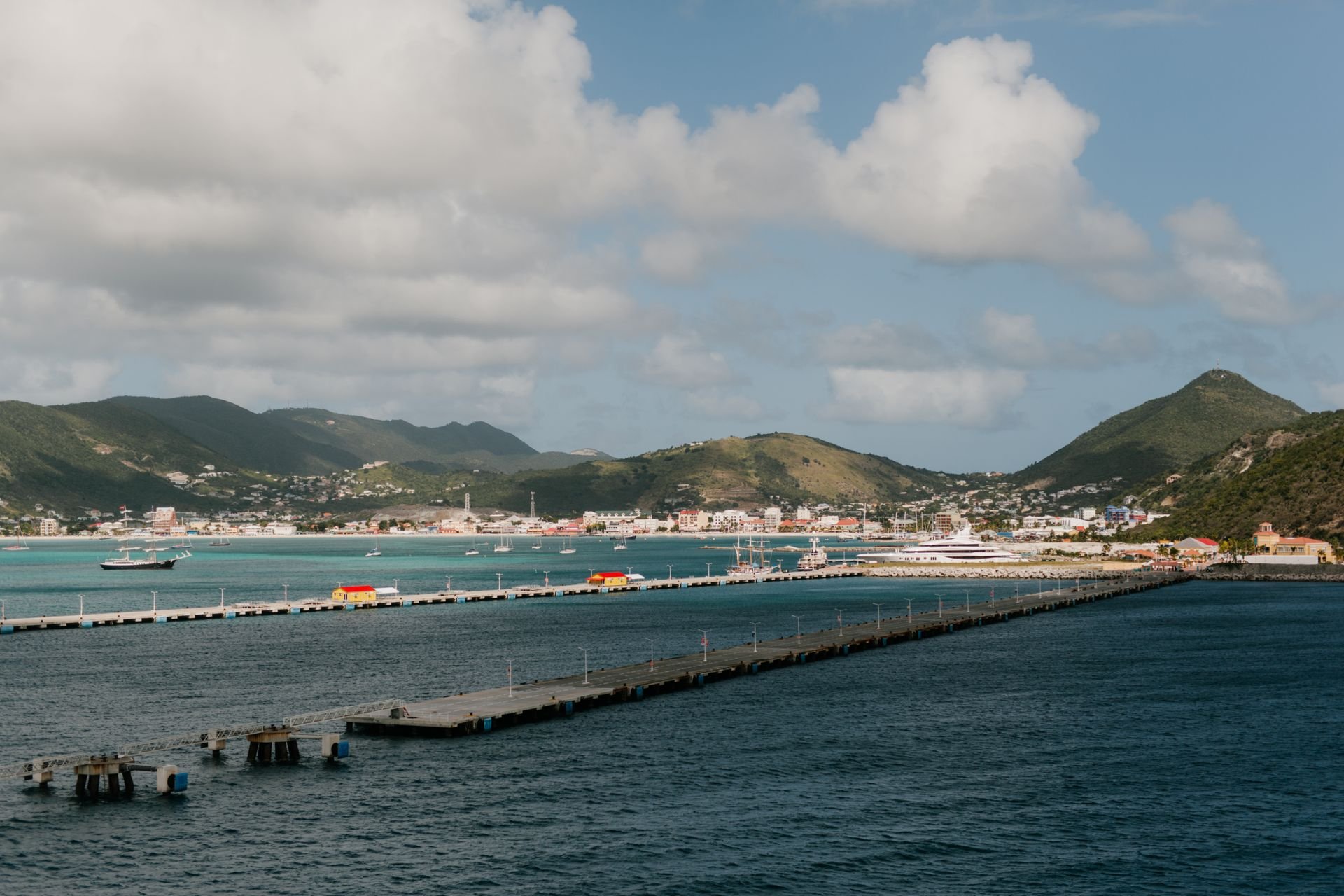
Relocating to St Maarten: What the Dutch Side Actually Involves
Sint Maarten, the Dutch side of the island it shares with French Saint-Martin, runs one of the more open property markets in the Caribbean, paired with a tax system inherited from the old Netherlands Antilles.
Buying property
Foreigners can buy property in Sint Maarten with the same rights as local buyers. No special licence, government permit or local partnership requirement stands in the way, a simpler starting position than the Alien Landholding Licence systems found across the OECS islands. The purchase runs through a local notary, ending in a deed of transfer, at which point a transfer tax (Overdrachtsbelasting) of 4% of the transaction value falls due, paid by the buyer. There is no capital gains tax on a subsequent sale.
The land tax question
Sources have long disagreed over whether an annual property tax applies on the Dutch side. A February 2026 Sint Maarten Government announcement settles it: the 0.3% annual land tax (Grondbelasting) exists on the statute book but has never been enforced in practice, and the Council of Ministers has approved a proposal to abolish both the land tax and inheritance tax formally. Buyers should check whether that legislation has completed the parliamentary process by the time they purchase, since an unenforced tax and an abolished one are not quite the same thing on paper.
Tax on the way in
Sint Maarten has no VAT. In its place sits a Turnover Tax (Belasting op Bedrijfsomzetten, commonly BBO or TOT), levied on business revenue rather than at the point of consumer sale, generally at 5%. Import duties on most general goods are absent, reflecting the island's status as a free port, though fuel and tobacco carry their own excise duties. A room tax also applies to hotel and short-term vacation rental guests, relevant to anyone planning to rent out a property rather than occupy it full-time; check the current rate, as room tax is being folded into turnover tax.
Work permits
Non-Dutch foreign nationals generally need an employer-sponsored work permit through the Labor Affairs department, alongside a separate residence permit through Immigration and Border Protection. Employers are expected to advertise the vacancy and document that a local hire was not available before an application proceeds. First-time permits typically run up to a year and are renewable.
Banking
Banking runs under the supervision of the Central Bank of Curaçao and Sint Maarten, with several international and local banks operating on the island. Account opening for foreigners requires substantial documentation, including source-of-funds evidence, and banking secrecy has reduced considerably in recent years due to international compliance and Common Reporting Standard obligations. The Caribbean Guilder replaced the Netherlands Antillean Guilder as the official currency on 31 March 2025, and the old guilder stopped being legal tender on 30 June 2025, so any contracts or accounts should now be in the new currency or US dollars.
Getting there
Princess Juliana International Airport is one of the busiest hubs in the Eastern Caribbean, making Sint Maarten a convenient base for onward travel to smaller neighbouring islands, including St Barthélemy, and a common routing point for shipments heading to islands with less direct freight access.
Open property ownership, a lighter tax structure than most neighbours, and a clear government position on the land tax put Sint Maarten among the more straightforward Caribbean markets to plan a purchase in, provided the abolition legislation is checked rather than assumed complete.
This guide is general information at the time of writing, not legal, tax or immigration advice. Rules and figures change, so confirm current requirements with a licensed local attorney or the relevant authority before making decisions.
Explore related blogs
View All
Renting Out Your Turks and Caicos Property: Licences, the 12% Tax and Tighter Enforcement
Investment Strategies
Renting Out Your Bahamas Property: Registration, VAT and the New Property Tax Class
Investment Strategies
Best Areas to Buy in St Vincent and the Grenadines: Villa, Bequia, Union Island and Beyond
Investment Strategies
Looking for Properties?
Browse homes that match your needs and budget with expert support and personalized advice to help you find your perfect Caribbean property. Get started within 5 days for quality advice to begin searching.